Apartment power outage
Apartment Power Outage: A Renter's Safe-Response Plan
Apartment power outage? Get safe first steps, reporting contacts and backup planning from Fairway, the AI agent for renters. Free for renters.
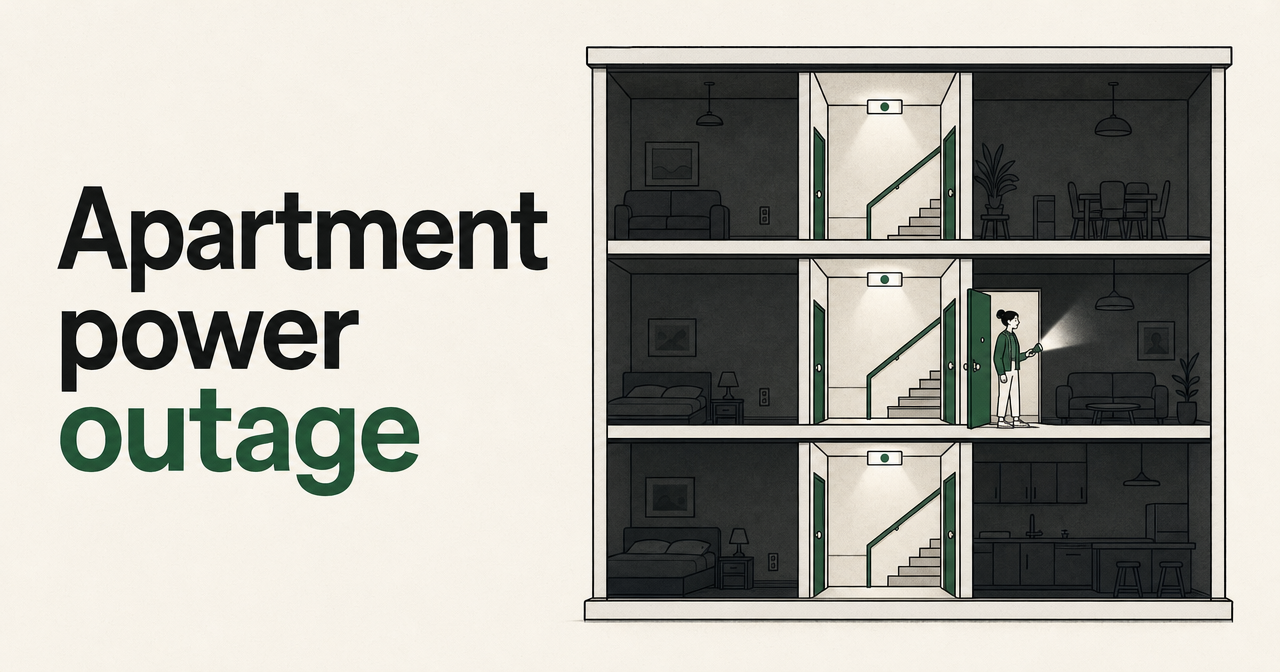
An apartment power outage can leave you waiting on two different updates: when the utility will restore electricity and what still works inside your building. A charged phone helps. It cannot get an elevator moving or bring water to an upper floor.
We want you to have a plan for both sides of that problem, with clear contacts, safe ways to get through the outage, and a point at which you stop waiting and go somewhere with power.
What to do when your apartment loses power
Handle emergencies before maintenance reports. Call 911 from a safe location for outage-related emergencies, including fire, downed power lines, a trapped elevator passenger, or a life-threatening loss of medical-device power. Stay away from fallen wires and anything touching them. An ordinary outage report goes to the utility, not 911.
For a suspected gas leak, leave immediately without using switches, appliances, or your phone inside. Call 911 and the gas utility from outside.
If a carbon monoxide alarm sounds, get outside immediately and call 911. Do not stay inside looking for the source.
When there is no immediate danger:
- Use a flashlight or battery lantern. Keep your phone available for communication instead of using it as the room's only light. Avoid candles.
- Note when the outage started. Keep the refrigerator and freezer closed. That start time matters for food safety later.
- Turn off cooking appliances and nonessential equipment. Unplug ordinary appliances and sensitive electronics when you can safely reach dry, undamaged plugs. Follow the separate outage plan for medical equipment.
- Send a short message to someone you trust. Say where you are, whether you need help, and how you will stay in touch.
These steps follow the Red Cross outage guidance. Keep away from standing water near electrical equipment. Leave electrical panels, wiring, and shared utility rooms to building staff and qualified professionals.
Contact management and the utility for different reasons
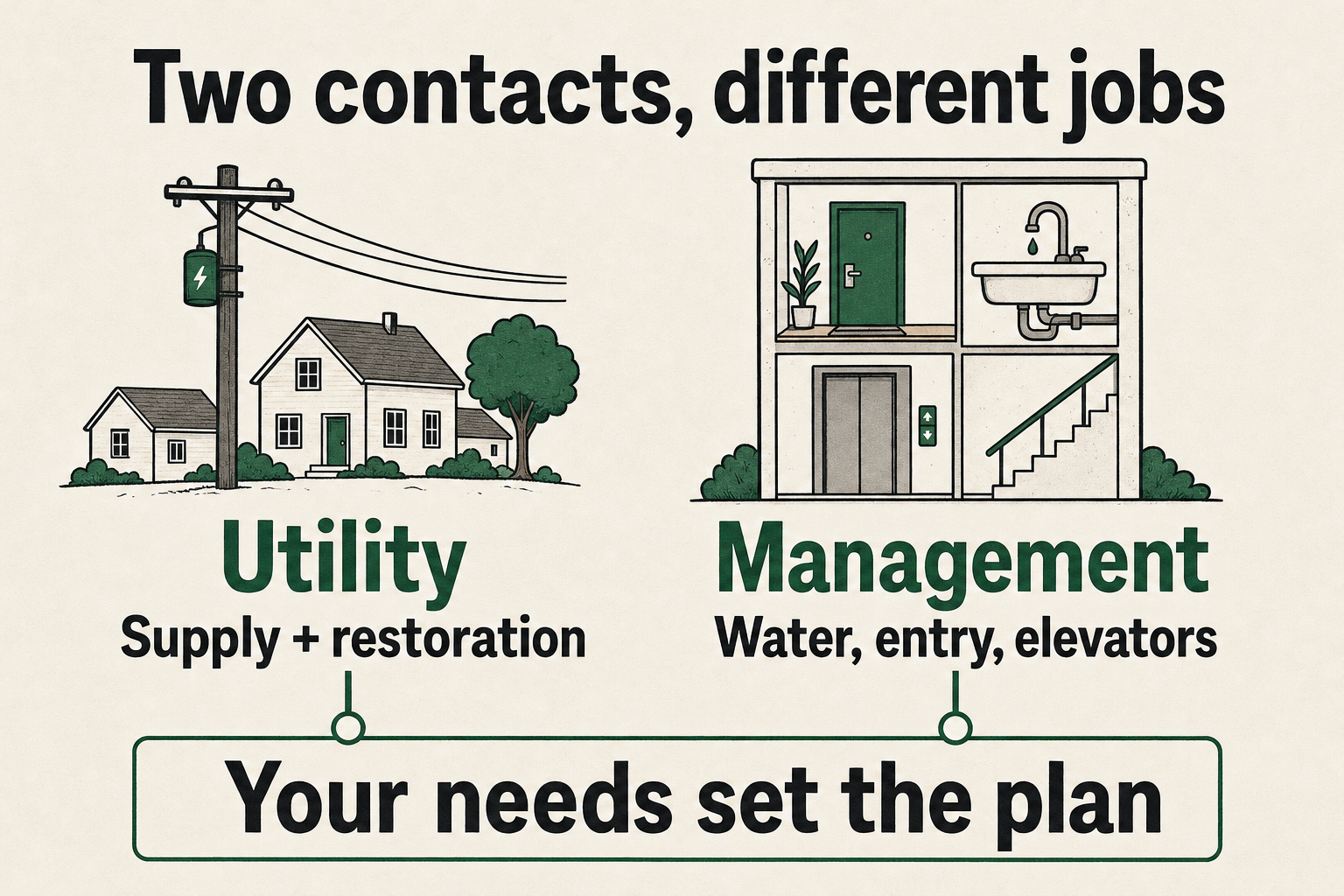
The utility needs an outage report. Your landlord or property manager needs to know about problems inside the property, including lost water, unsafe shared areas, and elevator failures. One report does not replace the other.
Describe what you can observe without opening equipment or walking through dark or unsafe spaces:
| What you notice | Who to contact and what to say |
|---|---|
| Only your apartment, or part of it, has lost power | Call emergency maintenance. Name the affected rooms and say whether a nearby neighbor also lost power. Report the loss to the utility as well if its extent is unclear. |
| Nearby apartments or buildings also lost power | Report your address through the utility's official outage channel. Tell management about any building-service problems. |
| The lights return, but water, entry systems, or elevators still do not work | Contact management about each remaining service. A neighborhood restoration notice does not resolve an unfinished building repair. |
| You cannot safely leave or meet an urgent medical need | Call 911 for an immediate emergency. Contact management and your support person for non-emergency assistance. |
NYC Emergency Management makes the same distinction between reporting the outage to the power company and reporting building problems to management. Do not assume either already knows about your unit.
Use the after-hours maintenance number as well as a written message. If the resident portal is unavailable, an email or text can preserve the report:
Power went out at [time and date] in Unit [number], [address]. The affected areas are [rooms/whole apartment]. [A nearby neighbor is also affected / I do not know whether other units are affected]. We also have [no water/no elevator/no shared-area lighting/another problem]. Please confirm receipt, the building's current safety instructions, and how residents will receive the next update. I need [specific access or assistance], and my callback number is [number].
Save the utility confirmation, management's responses, and the times service stops and returns. Record observations rather than guessing at a cause.
Ask what your building's backup power actually covers
“The building has backup power” leaves several questions unanswered. Backup may serve only selected equipment. Hallway emergency lights can run on independent power or batteries, so a lit corridor does not prove that apartment outlets or elevators have power.
Ask management for the building's written outage plan before the next interruption. PG&E's apartment emergency advice specifically calls for learning the building plan, arranging more than one exit route, and finding out how elevators behave during an outage.
| Building dependency | A useful question for management |
|---|---|
| Shared-area lighting and alarms | Which systems have backup power, and what happens when that backup ends? |
| Elevators and stairs | Does any elevator remain available? What is the assistance plan for residents who cannot use stairs? |
| Entry and parking | How do residents enter and leave if fobs, intercoms, or powered garage doors stop working? Is a physical key or staffed entrance available? |
| Water and toilets | Does water pressure depend on electric pumps? Which floors are affected, and what water-use instructions apply? |
| Heat, cooling, and hot water | Which services stop, and where will residents receive information about temporary alternatives? |
| Communication | Who answers after hours, and where will updates appear if phones or the resident portal are unavailable? |
Keep the answers on paper with the emergency number. Include your unit, floor, exit routes, and an agreed contact for assistance. A screenshot stored on the phone is useful too, until the battery runs out.
Follow the building's emergency instructions for elevator access during an outage. If you are trapped in an elevator, use the emergency alarm or phone and wait for responders. Never force the doors or try to climb out.
Separate phone charging from medical backup power
A charged power bank and the right cable can keep a phone useful. Before forecast bad weather, charge your phone and backup batteries. During an outage, reduce nonessential use and use texts for routine updates. Keep a battery-powered radio available in case cellular service also fails.
A phone charger is not a medical-device backup plan. For equipment that needs electricity, make a device-specific plan with your healthcare provider and equipment supplier. The FDA's medical-device outage workbook covers these questions:
- What is the device's make and model, and who provides support?
- Which backup power source is compatible, and how long will it support the prescribed use?
- What should happen if power fails during treatment?
- Which supplies, instructions, and contacts need to travel with you?
- Where can you continue care, and how will you get there?
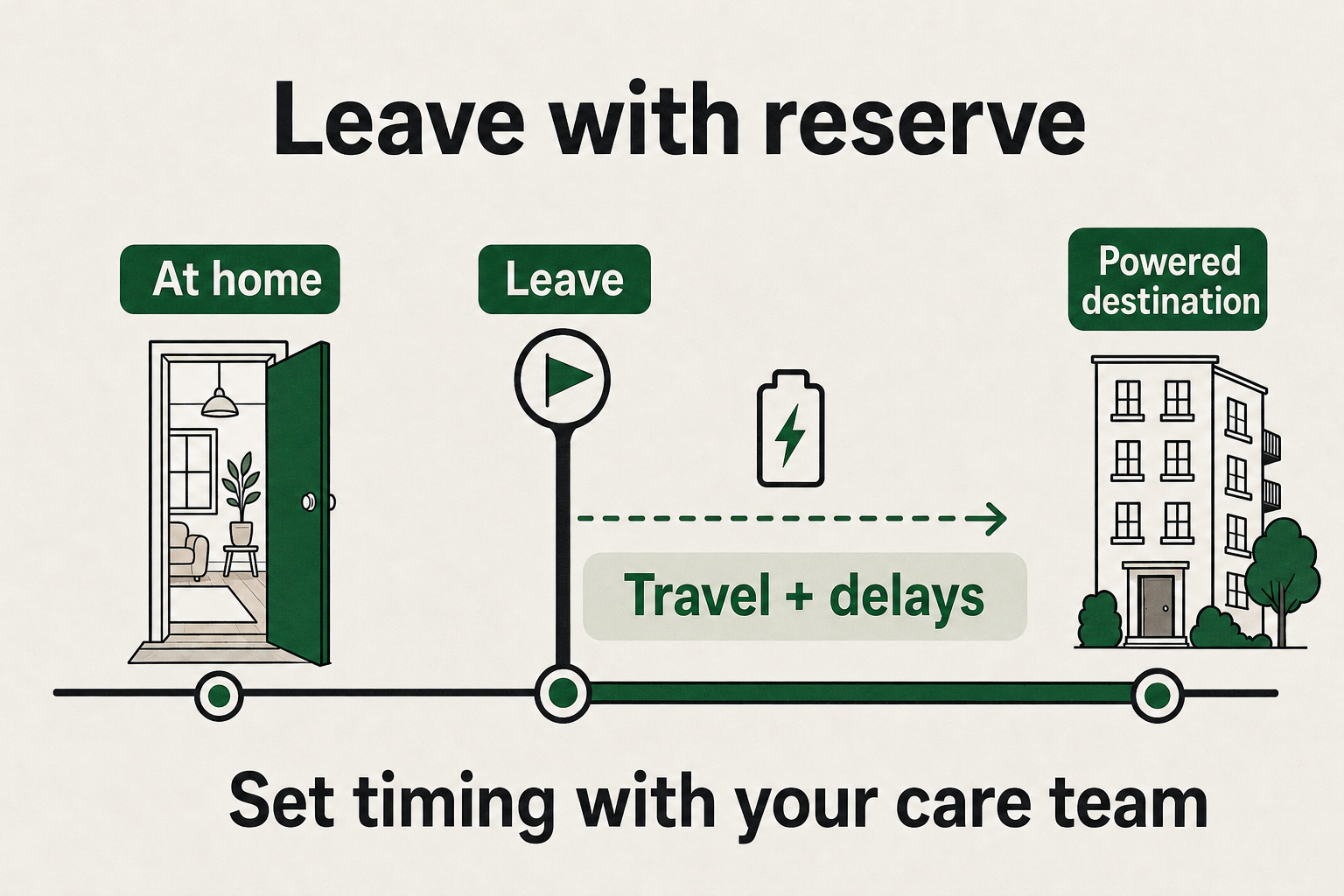
Plan the trip before the backup runs out. A departure plan needs enough reserve for leaving the apartment, waiting for help, and traveling to the powered location. Include elevator loss in that discussion if stairs are not an option. The departure point belongs in the plan you make with your care team; a utility restoration estimate cannot set it for you.
Tell management about assistance you may need. Ask whether your utility offers a medical-needs notification program and how to enroll. NYC renters can use NYC's utility-disruption guidance to find local registration contacts. Registration adds a communication channel. It does not replace backup power or an evacuation plan.
Give refrigerated medicine its own plan
Food-storage rules are not medicine-storage rules. Arrange a cooling plan with your pharmacist, including any cooler or gel packs your medicine requires. If medicine has been outside its recommended temperature, contact the pharmacist, healthcare provider, or manufacturer for instructions about continued use and replacement. Avoid making a blanket decision to discard or keep all refrigerated medicine. FDA medicine-storage guidance
Protect food without repeatedly opening the fridge
A closed refrigerator and freezer buy time. These are approximate cold-holding periods when the doors stay shut:
| Storage | Time without power |
|---|---|
| Refrigerator | About 4 hours |
| Half-full freezer | About 24 hours |
| Full freezer | About 48 hours |
If the outage is approaching four hours, move refrigerated perishables to a cooler with ice or another cold source. Keep them at 40°F or below. Discard refrigerated perishables such as meat, milk, eggs, and leftovers after four hours without power or a cold source. Never taste food to decide whether it is safe. Frozen food that still contains ice crystals or is at 40°F or below can be refrozen or cooked. CDC food-safety guidance
An appliance thermometer and a cooler belong in the plan before an outage. Smell alone cannot establish that food is safe.
Decide when staying home stops being safe
There is no universal “wait 24 hours” rule. A short outage can already be unsafe when medical equipment stops, an apartment becomes dangerously hot or cold, or a resident cannot get needed assistance.
Choose a powered destination and a way to reach it before you need them. That could be a friend or relative's home, or a public shelter or warming or cooling center suited to your needs. A general charging location may not provide medical support. Arrange care needs through your provider and follow local emergency instructions about safe travel.
The Red Cross recommends relocating when a home is too hot or cold or medical equipment needs power. Leave before conditions or dwindling backup power make the trip harder. For an immediate threat to life, call 911.
Never use a gas stove or oven to heat the apartment. Keep fuel-burning generators off balconies and out of apartments, garages, and shared indoor spaces. Never bring a grill or camp stove indoors. Open windows do not make these uses safe. EPA outage safety guidance
Keep a compact outage kit where you can reach it
Start with supplies you already own, gathered in an accessible place:
- Flashlights or battery lanterns, with spare batteries.
- Charged phone power banks, charging cables, and a battery-powered radio.
- Drinking water, ready-to-eat food, and a manual can opener.
- An appliance thermometer, cooler, and frozen gel packs.
- Medicines, personal medical instructions, first aid supplies, and any device-specific backup supplies.
- Paper contacts, keys, essential documents, and supplies for children, pets, or service animals.
For water, store at least one gallon per person per day for at least three days. Two people need at least six gallons for that initial supply. Add water for pets and additional needs. CDC water-storage guidance
Keep smoke and carbon monoxide alarms working, with batteries or battery backup. Report missing or malfunctioning building-provided alarms to management promptly.
When power returns, report anything still missing
Bring ordinary appliances back into use gradually. Follow your device-specific instructions for restarting medical equipment and recharging its backup.
Note the restoration time and tell management if your apartment still has no power or another building service remains unavailable. If hot water does not return, our no-hot-water action plan covers the repair report and follow-up.
Replace used supplies, recharge batteries, and add any gaps to the paper plan. “The fob stopped working” is useful information to have before the next outage.
For your next apartment hunt, add these building questions to your apartment viewing questions. Our AI agent for renters is free for renters: describe what you need, and we find matches, call landlords or leasing offices, and book tours. Start your apartment search with your access and building needs included.