Apartment tours
How Long Do Apartment Tours Take? Leave Room for the Whole Visit
How long do apartment tours take? Plan guided and self-guided visits, amenity time, travel, and breathing room with Fairway, the free AI agent for renters.
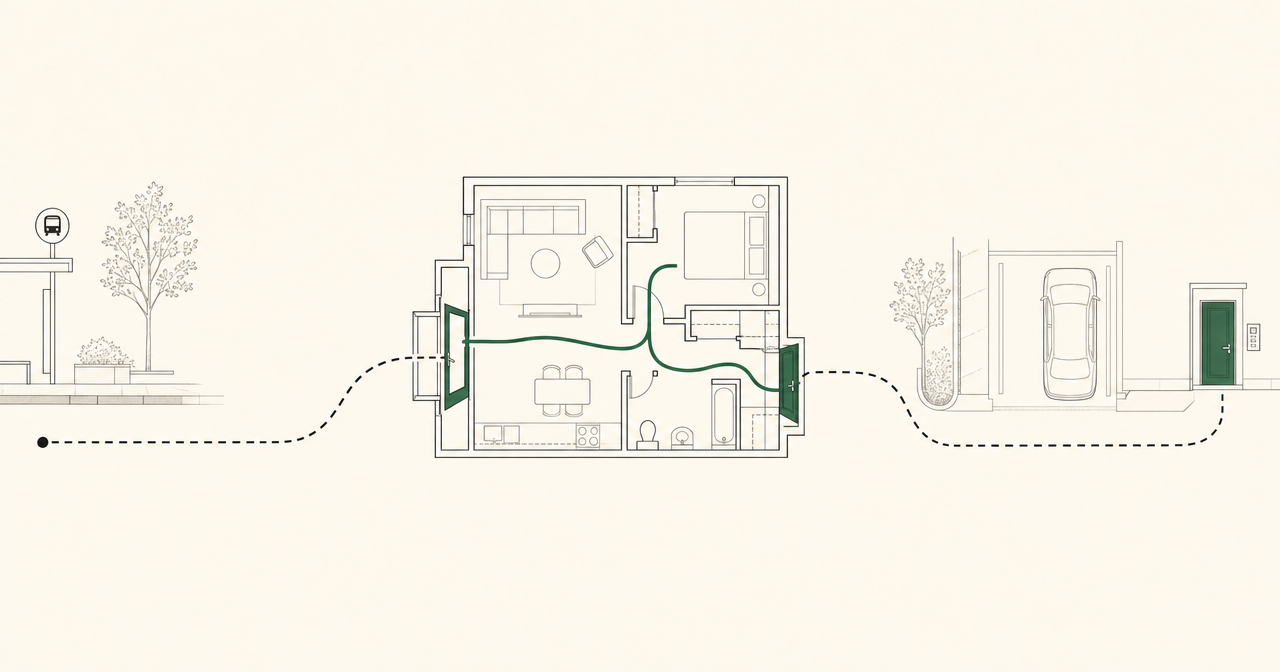
A tour can look like a small gap in your afternoon until the leasing office is on the other side of the courtyard and the next building has no visitor parking. The time inside the apartment is only part of the outing. A realistic plan leaves room for the unit, any shared spaces on the route, and the trip before your next commitment.
Allow 30–60 minutes for the tour, then add the trip
For day planning, 30–60 minutes is a useful starting allowance for an in-person apartment tour. A brief visit can be shorter. A large community, several floor plans, or an extensive amenity route can take an hour or more. The property's stated appointment length takes priority over that general allowance.
Greystar's apartment tour guidance puts a standard visit at 30–45 minutes for the unit, common areas, and amenities. It allows an hour or more for larger communities or multiple layouts. Those are planning estimates, not a deadline for every visit.
Keep two separate blocks in mind:
- Tour time: the appointment window for seeing the apartment and the spaces included in the visit.
- Time around the tour: getting there, parking or walking from transit, check-in or access, leaving the property, and reaching your next stop.
A 30-minute tour does not automatically fit into a 30-minute break. That distinction matters whether you are protecting a lunch hour, arranging child care, or getting back to work.
The calls and back-and-forth around apartment hunting take time too. We handle that legwork with Fairway, our AI agent for renters. It is free for renters: you describe what you want, and we find matches, call landlords or leasing offices, and book tours. The visit itself still needs breathing room.
Guided and self-guided tours can use the same amount of time
A guided tour means a leasing agent or another property representative accompanies you. A self-guided tour means you visit in person without someone walking the route with you. Neither label tells you the length on its own.
Guided tours: allow for the full property route
With a guided visit, the appointment may include meeting the agent, walking to the apartment, seeing the unit, and visiting shared spaces. Conversation can also use part of the window.
For a guided visit, allow the full stated appointment length. A route through several buildings or different floor plans has more ground to cover than a single-unit walkthrough.
Treat a posted 20-minute or 60-minute appointment as its own time block. A short slot is not a promise of a full community tour, and an hour-long slot does not mean you will spend an hour inside one apartment.
Self-guided tours: your own pace can still have a time limit
Self-guided visits can have fixed appointment windows, including half-hour and hour-long slots, just like guided ones. Some communities give both formats the same length. You should not automatically halve the time because no agent is coming along.
The route may include a model or available apartment plus selected amenities. Depending on the property, access can involve finding a lockbox, collecting keys, following a map, and returning the keys afterward. A self-guided visit removes the accompanied walkthrough. It does not remove the walk.
Allow the full stated window rather than treating self-guided access as an open-ended visit. Where the property provides a map or access instructions, those define the spaces and route available during that appointment.
| Part of the visit | Guided tour | Self-guided tour |
|---|---|---|
| Apartment | Walkthrough with the property representative | Walkthrough at your own pace within the appointment window |
| Amenities | The shared spaces included in the agent's route | The shared spaces included in the access route |
| Movement around the property | Walking, stairs, elevators, or travel between buildings | The same movement, plus finding your way without a guide |
| Finishing the visit | Returning to the meeting point or leaving the property | Leaving the unit and completing any key-return or exit steps |
The unit and amenities share the tour window
There is no dependable rule such as “15 minutes in the apartment, then five minutes per amenity.” A gym beside the lobby and a rooftop reached by a separate elevator are very different stops.
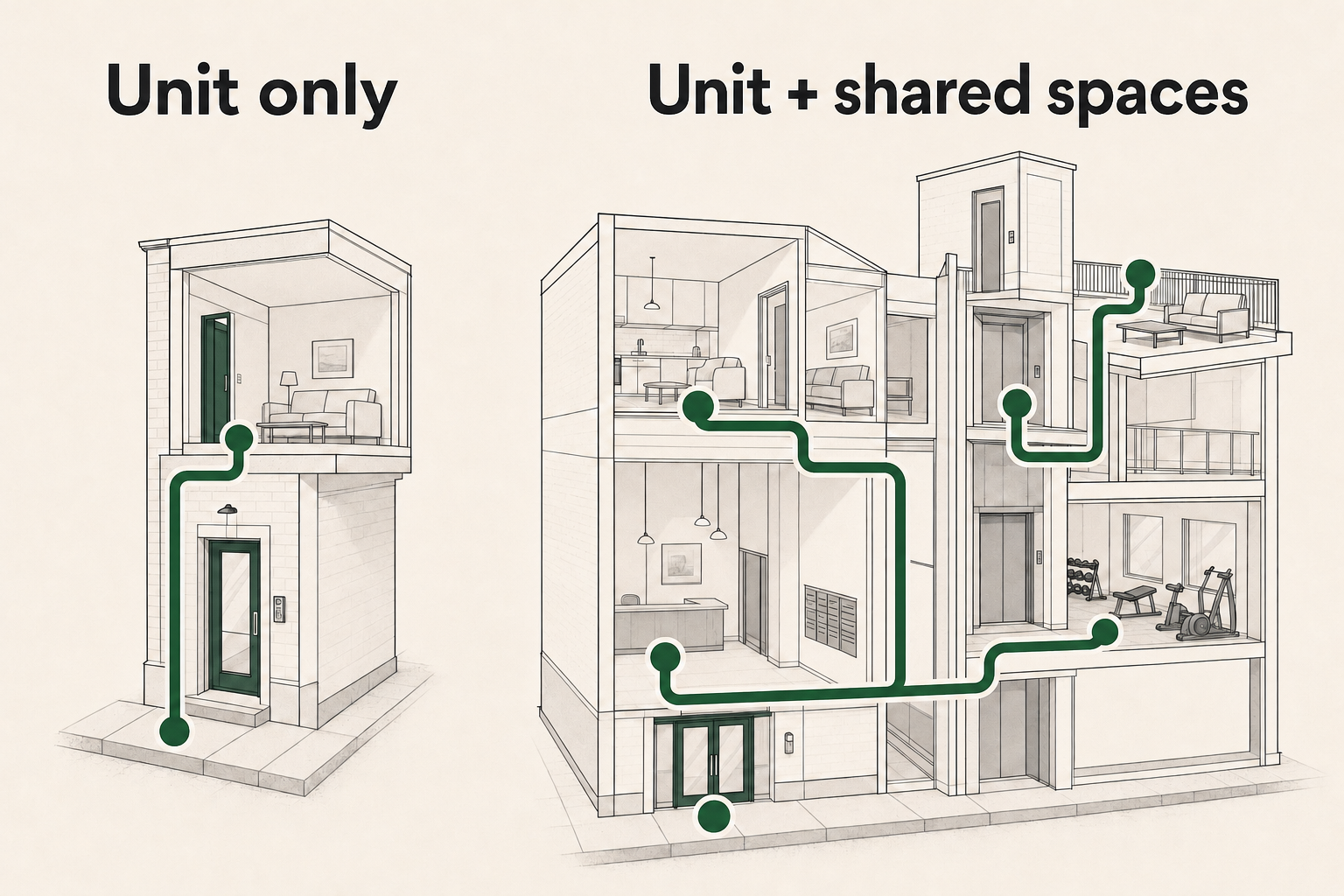
A useful expectation is that the advertised window covers a particular visit, which may include more than the apartment. Avoid adding a second full tour allowance for amenities when they are already part of the route. Equally, a unit-only viewing should not be treated as time reserved for every shared space in the community.
A unit-only visit has fewer moving parts
Seeing one apartment in a compact building can be a short visit, especially when the meeting point is close to the unit. A larger or multilevel apartment can take longer to walk through, even without a separate amenity stop.
The number of layouts matters too. Seeing a second floor plan adds another walkthrough and possibly another trip across the property. That extra time comes from the route and the additional space, rather than a universal number of minutes per bedroom.
Shared spaces add distance as well as viewing time
A tour that includes a gym, laundry room, courtyard, and parking area has more stops than a unit-only visit. Even a brief look at each can involve corridors, gates, elevators, or outdoor paths between them.
This is why a small apartment in a spread-out community can require a longer visit than a larger apartment with a direct entrance. The apartment's square footage is only one part of the time budget.
Use a walking pace that works for you, including any step-free route or rest time you need. Heat, rain, and stairs can also make a tight turnaround less comfortable. Our guide to apartment tour clothes covers dressing for the whole route.
Build the gap between appointments from four parts
The space between two tours needs to cover more than the drive shown on a map. A useful calculation is:
Gap after the first tour = exit time + travel and arrival time + the next property's early-arrival requirement + spare time.
“Exit time” includes getting from the end of the first tour to the street, transit stop, or car. For a self-guided visit, it also includes any remaining key-return steps. Keep those steps inside the tour block if the appointment window already includes them, so you do not count them twice.
“Travel and arrival time” means the whole transfer to the next meeting point. A drive to the property's address may still leave you searching for visitor parking and walking to the leasing office. A transit trip may include waiting, a connection, and the walk from the stop.
The early-arrival requirement is property-specific. Some communities request five minutes; Greystar's guidance suggests about ten minutes for check-in. Use the arrival lead time in your appointment instructions as part of the outing, separate from travel.
Spare time is the unassigned cushion for a late finish, a slower walk, or an access delay. There is no single buffer that works for a walk down the block and a cross-city bus trip. A less predictable transfer deserves more room.
Example: a 30-minute tour with a 40-minute gap afterward
Imagine a tour that runs from 2:00 to 2:30 p.m. For this example, allow:
| After the first tour | Example allowance |
|---|---|
| Exit, travel, parking, and walking to the next meeting point | 25 minutes total |
| Spare time for delays | 10 minutes |
| Next property's required early arrival | 5 minutes |
| Total gap after the tour | 40 minutes |
The next appointment would start at 3:10 p.m. You would reach its meeting point by 3:05 p.m. if you used the full transfer allowance and all ten spare minutes. The two start times are 70 minutes apart, even though the first tour lasts only 30 minutes.
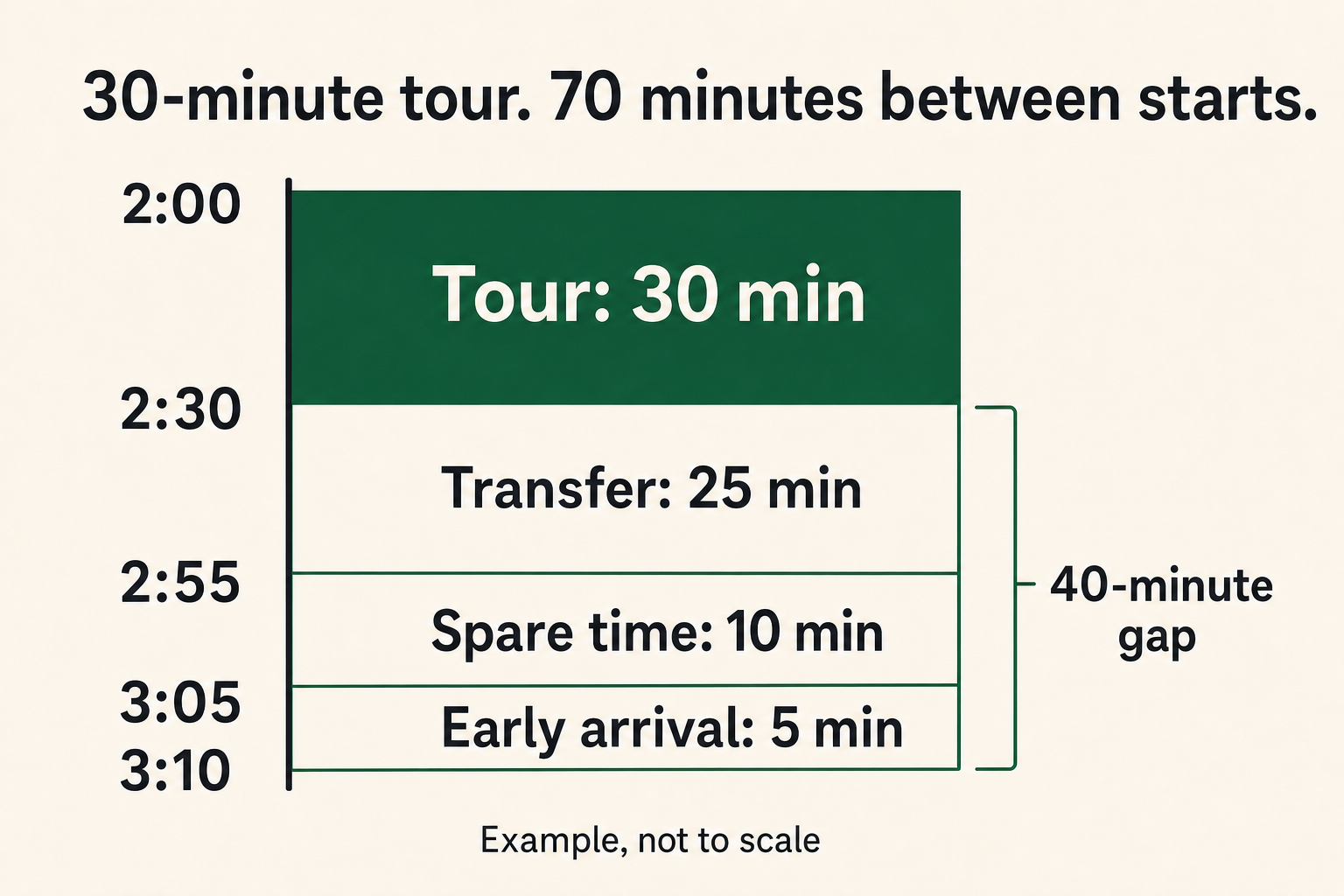
These numbers illustrate the calculation. They are not a standard travel time or required buffer. For a longer route or a less predictable trip, the gap grows.
A lunch-hour tour needs a door-to-door budget
A visit fits a work break only when the entire outing fits. Include both the journey to the property and the trip back to work.
For example, a 30-minute tour with a 15-minute trip each way already uses an hour. A five-minute early arrival takes it to 65 minutes before any spare time. The appointment may be short; the break still needs to be longer.
An after-work visit has a similar catch. The trip from your desk to the meeting point may include leaving the office, reaching the car or station, and getting through the building entrance. Keep those minutes visible instead of borrowing them from the walkthrough.
A live video appointment removes your trip to the property, but it still uses the appointment window. A prerecorded video or self-paced 3D walkthrough is different: its length depends on the recording and how you navigate or replay it. Our virtual apartment tour guide explains the formats in more detail.
Leave enough room to be present
The useful goal is a visit you can finish without watching the clock through every room. Start with the property's appointment window, count the complete route around it, and keep a separate cushion for the parts you cannot time precisely.
If unanswered calls are consuming the time you meant to spend seeing apartments, start your search with us. We can handle finding matches and booking tours while you focus on which home fits your life.