Renter safety
How to Avoid Rental Scams: A Before-You-Pay Checklist
Learn how to spot rental scam red flags, verify the property and landlord, pay safely, and act fast if you already sent money or personal data.
A fake rental can look completely real. Scammers often start with a real address, real photos, and even a real virtual tour. They change the contact information, invent a landlord story, and collect a fee or deposit before you notice the mismatch.
The safest rule is simple: do not send money or sensitive application information until you have independently verified the property, the person offering it, the paperwork, and the payment route.
This is not a rare edge case. The Federal Trade Commission recorded nearly 65,000 rental-scam reports and about $65 million in reported losses from January 2020 through June 2025. The median reported loss was $1,000.
This guide is for renters in the United States. Reporting routes, application-fee rules, and screening rights differ elsewhere.
The four checks to make before you pay or apply
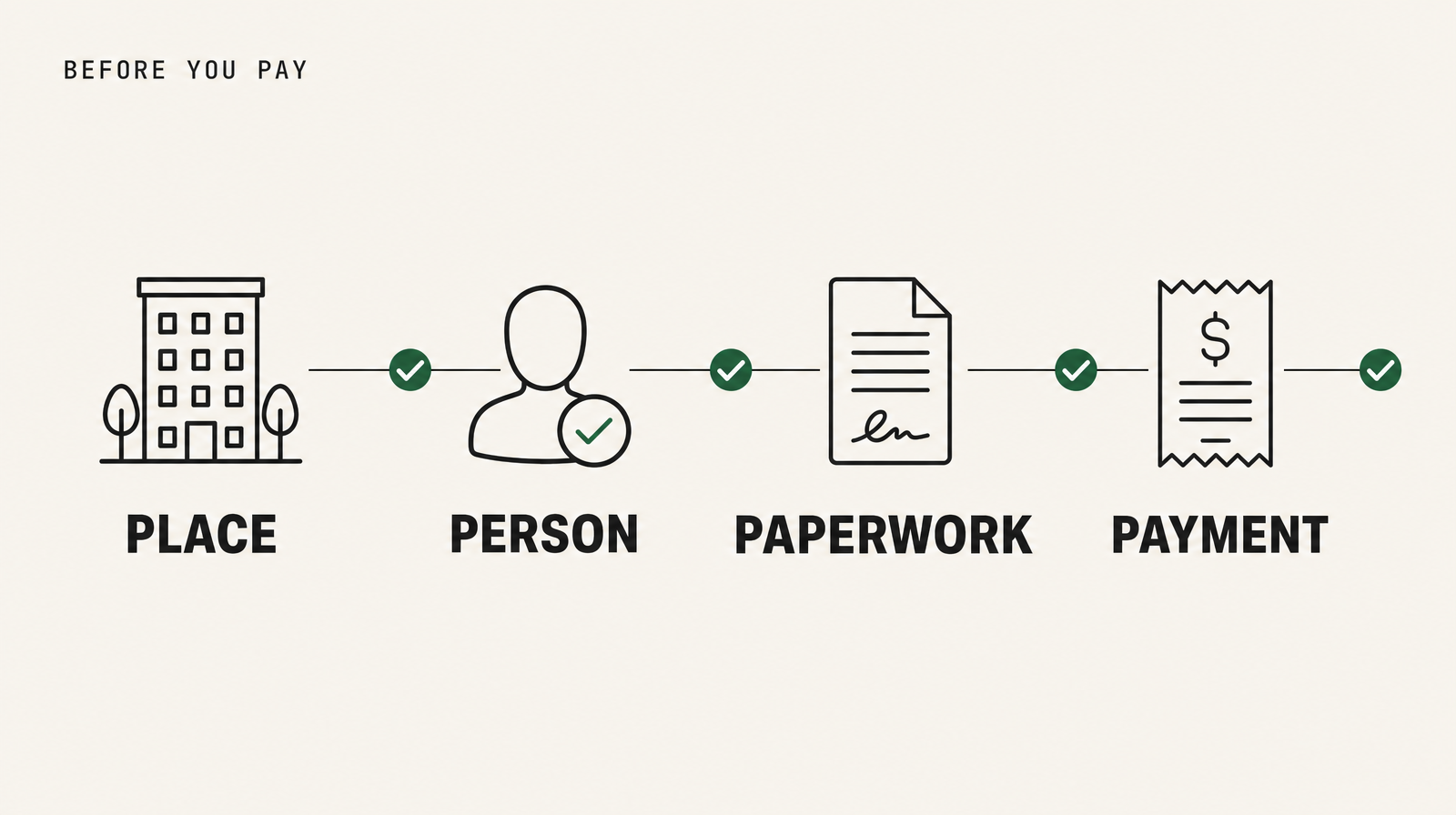
Before you pay an application fee, deposit, or first month's rent, check four things:
- Place: Does the exact property and unit exist, match the ad, and appear to be available?
- Person: Is the contact who they claim to be, and did you confirm that through a phone number or website you found independently?
- Paperwork: Do the lease, application, screening company, fees, names, address, and terms all line up?
- Payment: Does the recipient match the verified owner or property manager, and is the payment route documented and traceable?
One clean check does not cancel a problem somewhere else. A real house, a working key, or a valid agent license number can still be used in a fake offer.
How can you tell if a rental is a scam?
Look for a pattern of rental scam red flags rather than one superficial clue. One odd detail may have an innocent explanation. Several of these signs together should stop the process until you can verify the story independently.
The rent is far below comparable homes, and the deal expires today
Compare the price with similar rentals in the same neighborhood. A lower price is not proof of a scam. A dramatically lower price paired with pressure to pay today is much harder to explain.
A real leasing office should give you enough time to confirm who you are dealing with. “Three other people are ready to send the deposit” is not a reason to skip the basics.
The address or listing details conflict
Search the full street address. Pause if the same home appears:
- for sale instead of for rent
- with a different rent or availability date
- under a different owner, agent, or company
- with a different email, phone number, or application link
Scammers copy real listing photos, descriptions, and virtual tours, then swap in their own contact details. The polish may be stolen too.
The contact will not meet or answer specific questions
The supposed landlord may say they are abroad, traveling for work, or dealing with an emergency. That story becomes a red flag when they cannot arrange a credible showing, will not speak by phone or video, and dodge basic questions about the unit or building.
Text-only communication is not automatically suspicious. Text-only communication plus an identity that cannot survive an independent check is.
You are asked to pay before a credible viewing or verification
Be careful with any fee collected just to view a home. The same goes for an application fee, holding deposit, security deposit, or first month's rent demanded before you have verified the property and the person collecting it.
Even professional-looking paperwork is not enough. In one FBI case from Boston, a renter signed an apparently legitimate lease and wired $4,915. She later learned that the company named in the story did not manage properties in Boston.
The payment method is hard to reverse or does not match the company
Stop if an unverified contact insists on a wire transfer, gift card, cryptocurrency, cash, or a payment to a personal peer-to-peer account. Be especially cautious when the recipient's name does not match the verified owner or management company.
A familiar payment app does not make the recipient legitimate. A credit card may leave a better record and dispute path, but it does not authenticate a fake landlord either.
The application asks for sensitive information too early
A real tenant-screening process may require your Social Security number, date of birth, previous addresses, income, and consent to pull a report. That is exactly why a fake application can do so much damage.
Never share an account password or one-time verification code. Before submitting an SSN, driver's-license image, or bank information, verify the property, contact, application website, and purpose of the request.
The approval is suspiciously easy
Instant approval, no screening, immediate move-in, blank lease fields, or vague terms can be bait. Renting has enough paperwork already. A process that skips every normal question but still needs money right now deserves a closer look.
Typos, a Gmail address, or one particular payment app are weak signals by themselves. Conflicts that the contact cannot resolve through an independent source matter more.
How to verify a rental before sending money
The goal is to break out of the contact's information loop. Do not use their ad, phone number, documents, and links to prove that their ad, phone number, documents, and links are real.
1. Verify the place
Search the exact address and compare every result. Check the rent, listing status, unit number, photos, description, owner or company, email, phone number, and application link.
Then check for copied content:
- Run two or three clear listing photos through Google Lens or TinEye.
- Search a distinctive sentence from the description in quotation marks.
- Check the property manager's or brokerage's official site for the same unit.
The New York Department of State recommends reverse-image searching rental photos and treating an identical listing tied to a different email as a red flag. A match is not an automatic verdict, because legitimate listings are syndicated across many sites. A search with no matches is not proof of safety either.
Tour the correct unit before paying when you can. If you are moving from another city, ask someone you trust to go for you. Consumer.gov recommends a trusted local visit to confirm that the unit is actually for rent and matches the ad.
If no one local can help, request a live, interactive walkthrough. Ask the presenter to show the street number, unit number, view from a window, or inside a particular cabinet. A prerecorded tour cannot respond to you.
Still, access is only one check. The FTC warns that scammers can misuse legitimate self-tour systems. Entering the real unit proves it exists. It does not prove the person asking for money is authorized to lease it.
2. Verify the person or company
Find the property's official public record. Depending on the location, search for the county or city assessor, tax assessor, recorder, register of deeds, land records, or property lookup. Use the government site, not a screenshot the contact sends you.
Compare the owner in that record with the claimed landlord. If an LLC owns the property or a property manager is involved, find the company's official website and phone number yourself. Ask whether the named person is authorized to lease that exact unit.
If the contact claims to be a real-estate professional, search the official state license database. Then call the listed office through a number from the regulator or genuine company site. This second step matters because scammers can copy a real professional's public identity. The California Department of Real Estate has warned that criminals use legitimate names, license numbers, and company details.
Property records can lag, and the owner may have a legitimate manager. A mismatch is a reason to investigate, not automatic proof of fraud. What matters is whether the authority to rent the unit can be confirmed outside the ad.
3. Verify the paperwork and application
Before you pay, get written terms that identify:
- the owner or authorized property manager
- the complete property address and unit
- monthly rent and deposit
- each fee and what it covers
- whether a fee or holding deposit is refundable
- the payment recipient
Every name, address, and amount should match what you verified independently. A lease with blank spaces, a different payee, or instructions that change at the last minute needs an explanation before money moves.
For an application, reach the portal through the verified management company's site when possible. Confirm the domain carefully. HTTPS protects data while it travels; it does not prove the website is honest.
Ask which tenant-screening company the landlord uses and what the fee covers. Application-fee rules vary by state and city, so check the current housing department, attorney general, or consumer-protection site for the state or city where the rental is located.
A legitimate report-based decision also creates some accountability. If a tenant-screening report causes a denial, higher rent, larger deposit, or cosigner requirement, federal law generally requires an adverse action notice. It should identify the screening company and explain your right to request a free copy within 60 days and dispute errors.
4. Verify the payment
Confirm that the payee matches the owner or property manager you verified. If the payment instructions change or suddenly point to a personal account, call the official office before doing anything.
Use the property's documented payment channel and keep the receipt. A traceable method with a possible dispute route is better than cash-like payment, but no method makes an unverified transaction safe.
Do not let urgency decide this step. If the only way to keep the apartment is to wire money, buy gift cards, send cryptocurrency, or transfer a deposit to an unverified person immediately, walk away.
What to do if you already paid or shared information
Move quickly, but do not assume the money is recoverable. Work through these steps in order.
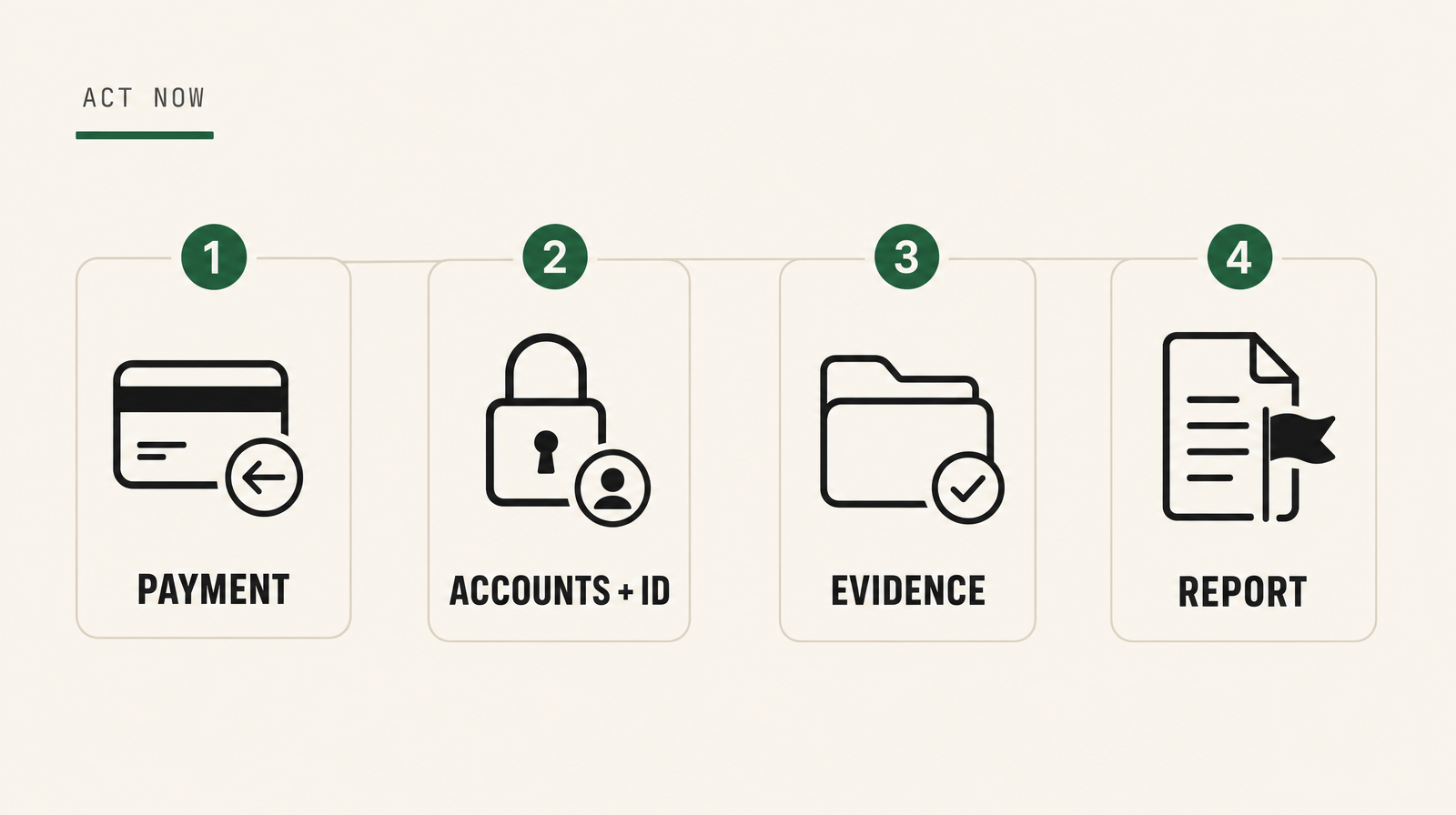
1. Contact the payment provider now
Use the official app, the number on your card or statement, or the company's verified website. Explain that the payment went to a scammer and ask whether it can be canceled, recalled, reversed, or disputed.
The FTC recommends contacting the company used to send the money no matter how you paid. If a payment app pulled from a linked card or bank account, report it to both the app and the linked financial institution.
Speed can help, especially before a wire is collected or deposited. It does not guarantee a refund, and a payment you authorized after being deceived may be handled differently from a transaction you never authorized.
2. Secure your accounts and identity
Change any password you shared and every place you reused it. Turn on two-factor authentication. If you exposed bank or card details, call the institution through a trusted number and ask how to secure or replace the account.
Never give a one-time code to someone who contacts you about the rental or the recovery. A real support agent should not need you to read back a code that lets them enter your account.
If you shared an SSN, driver's-license image, or similar identity data, use IdentityTheft.gov for a situation-specific recovery plan.
You can also place a free credit freeze with Equifax, Experian, and TransUnion. A credit freeze does not affect your score, lasts until you lift it, and can be temporarily lifted when you apply for a legitimate apartment.
Review your credit reports for accounts you do not recognize. AnnualCreditReport.com is the federally authorized site for free reports from the three nationwide credit bureaus.
3. Preserve the evidence
Save the listing URL and screenshots before it disappears. Keep:
- messages and chat logs
- emails with full headers
- phone numbers and account handles
- the application and lease
- receipts, transfer confirmations, and transaction IDs
- the recipient's name and account details
The FBI's Internet Crime Complaint Center does not accept attachments with its complaint form, so keep the originals securely in case an investigator asks for them later.
4. Report the scam
Report the listing on the site or app where you found it. Then report the fraud to the FTC at ReportFraud.ftc.gov. For an online rental scam, file with IC3. Your state attorney general and local law enforcement may also be appropriate, especially when money was lost.
Reports do not guarantee recovery. They can help remove a live listing, connect related cases, and give investigators the transaction details they need.
Finally, ignore anyone who promises guaranteed recovery for another fee. A person who already paid one scammer is an easy target for the next one. IC3 will not ask you for money to recover your funds.
A legitimate rental can survive verification questions
A legitimate landlord or leasing office should be able to explain the application, identify the company collecting your money, and handle a few verification questions. The apartment may move quickly. That does not make independent proof optional.
Once a listing passes those checks, Fairway's free AI agent for renters can take some of the manual search work off your plate by watching listings, calling leasing offices, and booking tours. The same rule still applies to every option: verify first, then move.