Laundry room rules
Laundry Room Rules for Sharing an Apartment Laundry Room
Laundry room rules for apartment renters: timing, cleaning, abandoned clothes, outages, and theft prevention. From Fairway, your AI agent for renters.
One finished load left in a machine can hold up everyone waiting for a turn. The awkward part is deciding what to do about it without starting a feud over somebody's socks.
Shared laundry works better when everyone understands the same expectations. Timing, clean machines, fair turns, and respect for other people's belongings matter. So does knowing which decisions belong to your building's management. Here's how we suggest handling the everyday snags, including clothes left behind and machines that take your payment without doing their job.
1. Follow your building's posted hours and laundry policy
Start with the rules posted in the laundry room and the laundry provisions in your resident handbook or lease. Use them for operating hours, reservations, machine limits, permitted items, and the process for handling clothes left in a machine.
Buildings use different systems. Even within the University of Wisconsin–Madison's University Apartments, the laundry room policy describes both sign-up schedules and first-come, first-served machines. Your last building's routine may be the wrong one here.
If you're still apartment hunting, our AI agent for renters finds matches, calls landlords or leasing offices, and books tours. We're free for renters.
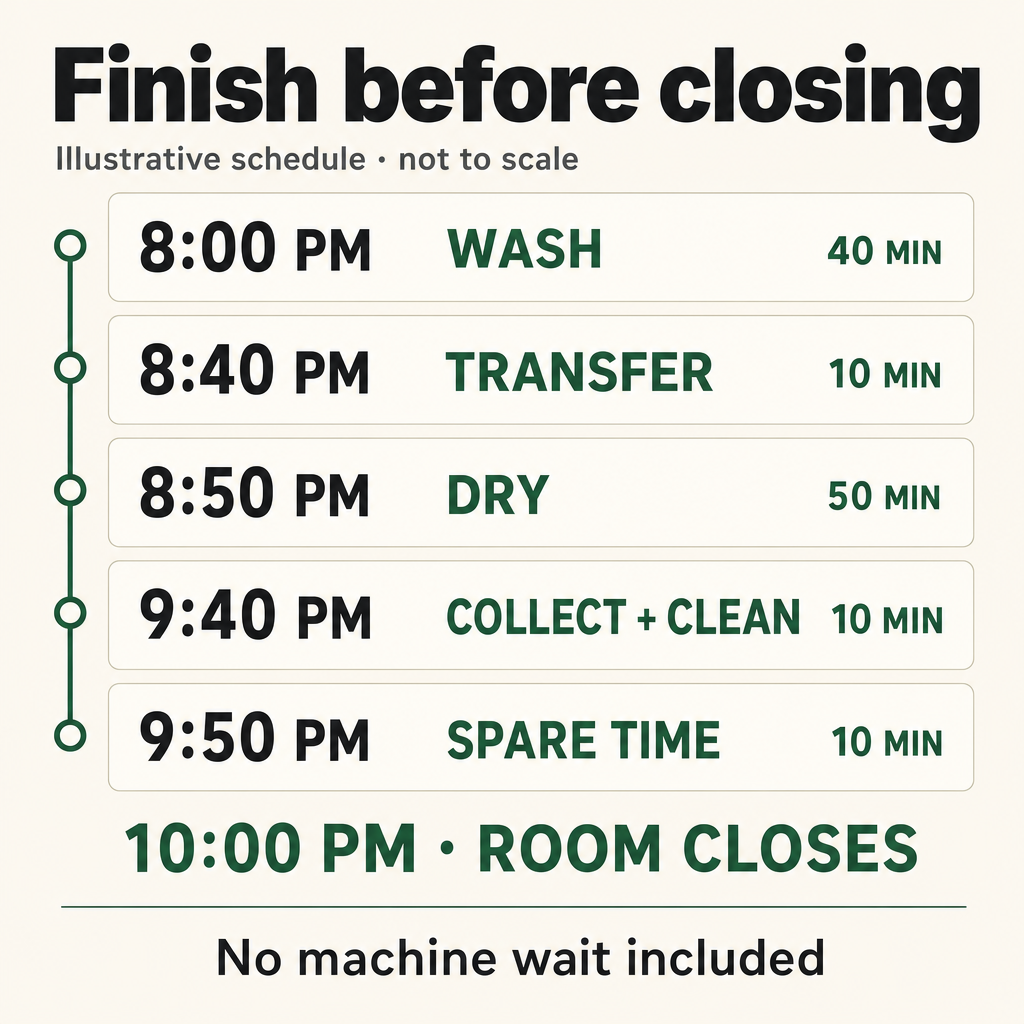
Treat closing time as the deadline to finish, collect your clothes, and leave. A room that closes at 10 p.m. is a poor place to start a full wash-and-dry session at 9:45. Follow any posted last-start time, too.
Keep voices, music, and door-slamming down, especially when apartments sit above or beside the room. If laundry hours and quiet hours seem to conflict, ask management for a clear written schedule rather than choosing whichever allows the later load.
2. Plan to return before each cycle ends
A timer helps only if you can act on it. Start a load when you'll be available to transfer it and collect it afterward. Leaving for a long errand puts the next renter's evening at the mercy of your return trip.
Use the machine's displayed cycle time to set your own reminder. Allow for the walk downstairs, an elevator, or any other delay between your apartment and the machine. If the laundry system sends alerts, keep your own reminder as backup.
Plan the whole session, including dryer access. For an illustrative evening load:
- Wash: 40 minutes.
- Transfer: 10 minutes.
- Dry: 50 minutes.
- Collect and clean up: 10 minutes.
That's 1 hour and 50 minutes before any wait for a machine. With a 10 p.m. closing time, an 8 p.m. start leaves only 10 minutes of extra room. The cycle times on your machines determine your actual schedule.
If all the dryers are occupied, starting several washers can create a pile of wet laundry with nowhere to go. Smaller batches are easier to move through a busy room. If a dryer is still unavailable when your wash ends, take your wet load into your own basket so the washer is free.
Sharing laundry duties with a roommate? Agree who handles the transfer and pickup before starting. A simple handoff belongs alongside other chores in your roommate agreement.
3. Join the machine queue without reserving extra space
In a first-come room, arrive ready to use a machine, with your clothes, supplies, and payment. A basket sitting on an empty washer is a poor substitute for an agreed reservation system.
These defaults keep turns clear when the building hasn't specified something more detailed:
| Situation | A considerate approach |
|---|---|
| Another renter is already waiting | Ask which machine they're waiting for before loading an empty one. |
| Your clothes are still washing | Leave an empty dryer available for someone whose wet load is ready. |
| You have several loads and people are waiting | Finish a load, then offer the next turn before starting another. |
| The room uses reservations | Stay within your slot and release a booking you won't use. |
There isn't a useful universal number of machines one renter should take. In a room with two washers, taking both while a neighbor waits ties up the entire wash capacity. In a larger, empty room, several loads may fit comfortably within the posted policy. Share the available capacity and leave room for the next person.
You don't need to hold court beside the dryers. A quick “Are you waiting for this one?” usually settles more than a silent standoff.
4. Handle clothes left behind according to the building's rules
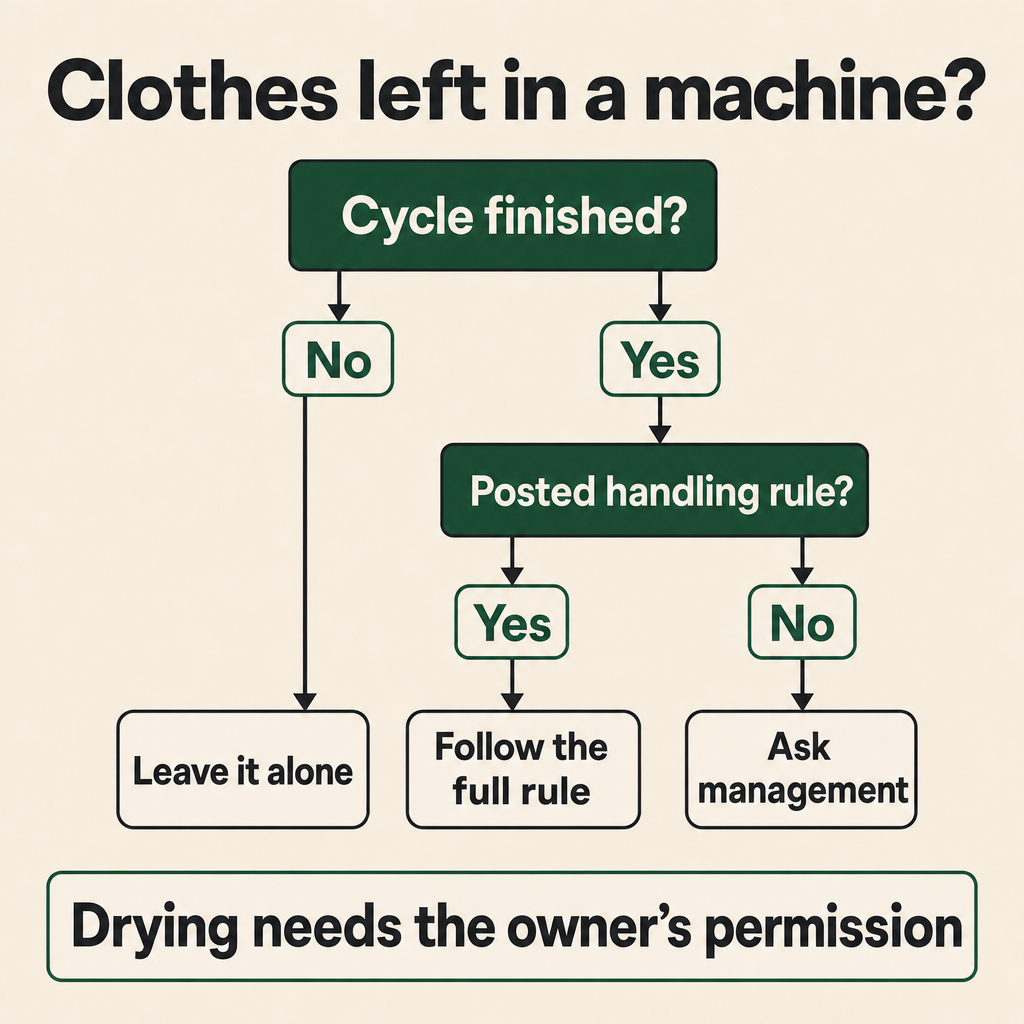
A finished cycle is not automatic permission to move someone else's laundry. A pickup deadline and permission to handle another renter's clothes are separate things.
A written policy can spell out that permission. For example, the Windsor's house rules, revised in April 2015, permitted a waiting resident to move a finished load into the laundry cart more than 15 minutes after a cycle ended. That is a historical example from one building, not a general countdown for every apartment laundry room.
When a machine is full and the owner is absent:
- Leave an active cycle alone. Don't stop it, change its settings, or force a locked door.
- Follow the posted procedure for finished loads. Honor the full grace period and any requirement that staff handle the clothes. If you didn't see the cycle end, don't guess how long the load has been sitting.
- Ask the owner to collect it if they're nearby. “Is this your load? I'm waiting for the washer” is enough.
- If no procedure is posted, contact management. Ask who may move finished loads, after how long, and where they should go. Use another available machine. If every machine is blocked, say so and request staff assistance.
If the policy allows you to move a load, handle it as little as possible. Use the designated clean cart, the owner's clean basket, or the surface specified by the building. Keep the load together. Never put it on the floor, fold or sort personal items, or take it to your apartment.
Don't put someone else's wet load in a dryer or start it without their permission. You don't know which items need to air-dry or which settings the owner intended to use.
Clothes left for days need management's abandoned-property process. They aren't yours to discard. For repeated problems, send management the machine number, dates, and times the load blocked access. Ask for a posted policy that covers pickup, handling, and storage. A public argument over whose laundry is worse rarely frees a washer.
5. Leave the machines and shared surfaces ready for the next renter
The cleanup is part of your laundry session. Before leaving:
- Remove every item from the drum, including the small things caught around the door.
- Wipe up your detergent or softener spills on machines, counters, and floors.
- Put lint, dryer sheets, and empty packaging in the appropriate bins.
- Clear your basket and supplies from folding surfaces and walkways.
- Return shared carts to their designated place.
For dryers with a user-accessible lint filter, clear it before and after your load and put it back correctly. The U.S. Fire Administration's dryer safety guidance calls for cleaning the filter before and after each cycle and says never to run a dryer without one. If the filter is locked, missing, or damaged, report it rather than trying to dismantle anything.
Use the detergent type and amount specified by the machine instructions and detergent label. Keep loads within the machine's stated capacity. Follow posted restrictions on pet bedding, rugs, dyes, and heavily soiled items. Don't assume that an item fitting through the door makes it suitable for that machine.
If you find a leak or contamination, stop using the machine and report it. Don't attempt to clean inside the equipment. Avoid adding bleach, disinfectant, or other cleaning products to shared equipment unless the posted instructions specifically call for them.
6. Report outages with enough detail to get the right machine fixed
A room with one broken dryer has fewer turns to share. Reporting it helps everyone, even when you can move your own clothes to another machine.
Use the service contact posted on the machine or in the room. A laundry vendor may handle equipment faults and refunds, while property management handles room access, leaks, or building utility problems. If the reporting route isn't identified, send the issue to management.
A useful report includes:
- Location: building address, floor, and laundry room.
- Machine: the ID from its label, or its exact position if the label is missing.
- Time: when the problem happened.
- Symptom: what you observed, including any error code.
- Payment: the charge amount and transaction reference, if money was taken.
- Status: whether your clothes are trapped inside and whether other machines are affected.
Keep it factual. Use this sample report, replacing the example details with your own:
Washer W-04 in the ground-floor laundry room stopped before draining at 7:20 p.m. My clothes are inside, and the app charged $3. The transaction reference is 4821. Please send the service ticket number and instructions for retrieving the load.
Save your receipt and the service confirmation. A refund request may be separate from a repair request, so name both when you need both. Don't keep paying to restart a faulty machine.
If notices are permitted, a short “Not draining, reported to management” note can save the next person a wasted payment. Leave controls, safety labels, and vents unobstructed.
For flooding or an electrical fault, stay clear of the affected area and use the building's urgent maintenance contact. For smoke, fire, or a suspected gas leak, leave the area and call emergency services from a safe location. A routine service form is not an emergency response.
7. Keep your belongings close and secured doors closed
Theft prevention and prompt pickup work together. Richfield Police's apartment safety tips warn that unattended clothing may be stolen and advise against leaving valuables in laundry rooms or propping open security doors.
Stay with your load when practical, especially if you're worried about missing items. If you need to step away, keep the absence short or ask someone you trust to watch it. A cycle alert tells you when a machine is done; it doesn't protect the contents.
Keep your phone, wallet, keys, and laundry payment card with you. Take detergent and other supplies home unless your building provides assigned storage. Use only your own supplies or items explicitly marked for communal use.
Let secured doors close behind you, and report broken locks or lights. Don't trade a working access system for the convenience of leaving the door wedged open.
If clothes are missing, look in the designated finished-load area and ask management whether staff moved them. Record the machine, time window, and missing items. Report suspected theft to management and the appropriate police reporting channel. Avoid accusations in the resident group chat, and don't confront someone you think has your belongings.
Make the laundry setup part of your next apartment decision
Good etiquette helps neighbors share working machines. Persistent outages, unclear access rules, or hours that never fit your schedule need a response from management.
When you next tour an apartment, give the laundry room a place on your list. Our apartment tour questions include its hours, payment method, working machines, and repair process. Those details tell you more about laundry day than “on-site laundry” in a listing.
If you're hunting for a home that fits your routine, tell us what you need. We find matches, call landlords or leasing offices, and book tours. Start your apartment search.