Moving checklist
Change of Address Checklist When Moving: A Renter's Timeline
Change of address checklist when moving: sequence USPS, accounts, IDs, deliveries, and move-out records. From Fairway, the AI agent for renters.
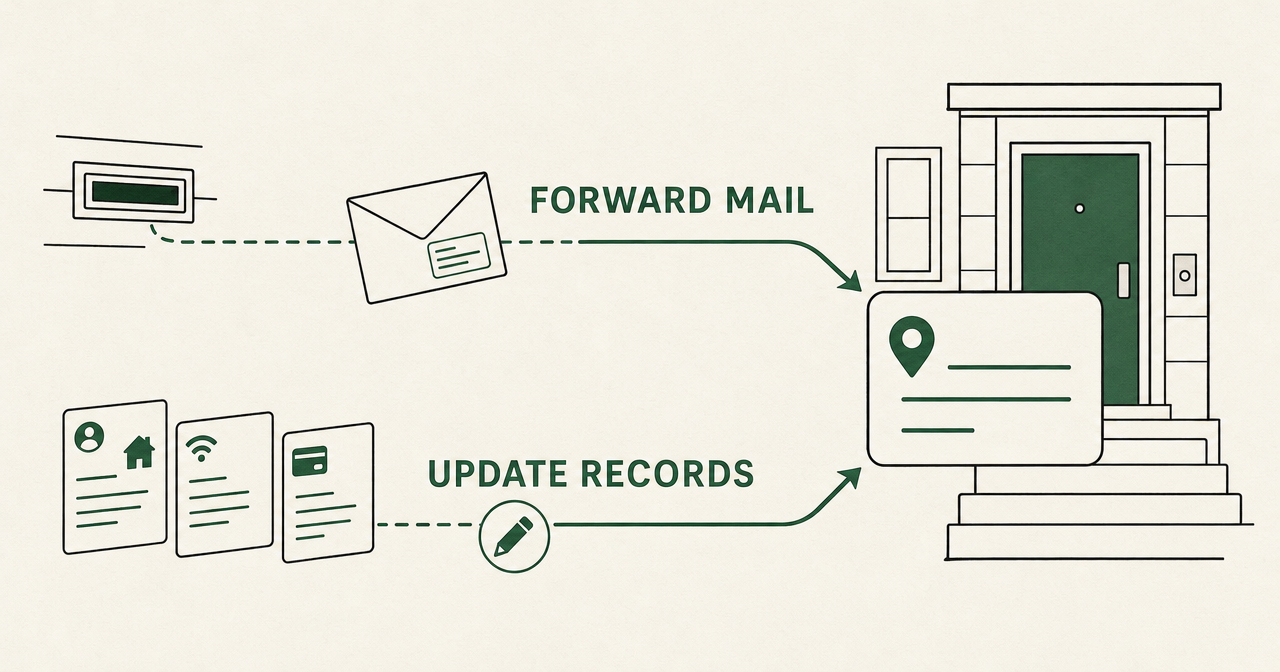
Your boxes have one destination. Your paycheck, replacement bank card, insurance records, and grocery order live in different systems. Updating them is another moving job that usually lands entirely on you.
A useful change of address checklist puts those jobs in order, separates suggested timing from legal deadlines, and closes out the old apartment. Still choosing your next place? Our AI agent for renters helps with the search, property calls, and tour scheduling. We're free for renters. The address handoff starts once you have a new unit and a move-in date.
Your change-of-address timeline at a glance
For a U.S. move, we recommend starting two to three weeks ahead. The schedule here is a planning aid. Agency deadlines, insurance requirements, lease terms, and election rules take priority, including any that arrive sooner. Schedule future-dated changes where available; a field asking where you live now needs your current residence.
| When we suggest starting | Who or what to update | What to finish |
|---|---|---|
| Two to three weeks before | USPS; old and new property managers; utilities; renters and auto insurers | Forwarding request, written mailing address for move-out records, service dates, and insurance arrangements |
| Before moving day | Employer; banks, cards, and lenders; deliveries and subscriptions | Effective dates, residential and mailing records, billing details, and individual orders |
| As you establish the new residence | Driver's license or state ID; vehicle records; voter registration; applicable government programs | Each agency's separate process within its actual deadline |
| First week in the new apartment | Medical offices, pharmacy, schools, pet records, memberships, and personal contacts | New contact details and any service transfers |
| Around 30 days later | Forwarded mail, remaining accounts, old rental portal, and final bills | Missed senders updated directly, refunds tracked, and old delivery defaults removed |
If moving day is already here, begin with urgent agency deadlines, active insurance, medication deliveries, and orders in transit. Then work through the remaining accounts. There is no benefit to fixing a rarely used shopping profile while a replacement debit card heads to the old unit.
For the rest of your move-in setup, our first apartment checklist covers utilities, keys, records, and day-one essentials.
1. Set up USPS forwarding, then update senders directly
USPS forwarding catches eligible mail still addressed to your old home. It does not complete your address changes with banks, employers, or government agencies.
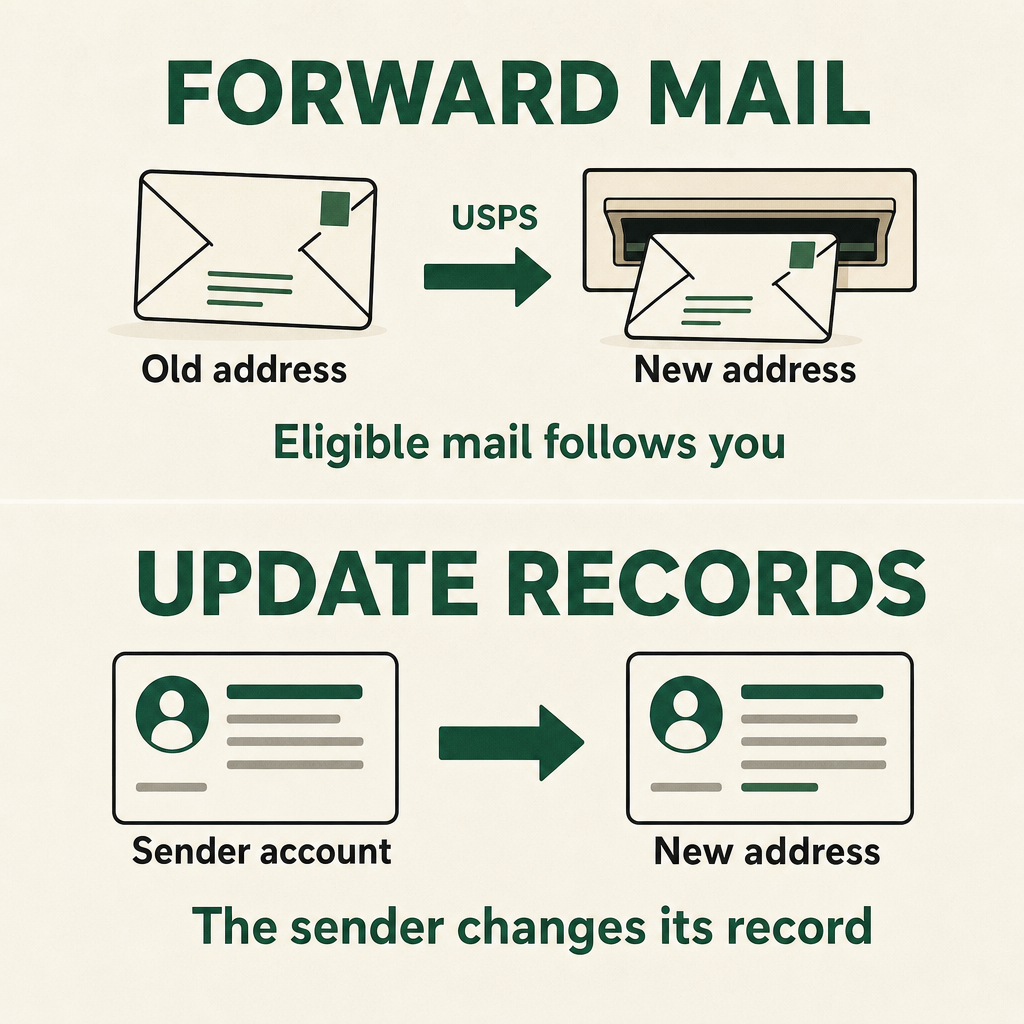
Use the official USPS process. Allow at least 7–10 business days after approval for the change to take effect. Online requests require identity verification and a $1.25 verification fee. In-person requests are free; a Post Office can process PS Form 3575 with the required identification.
Use individual requests for roommates, different surnames, or anyone moving while other household members stay. The family option is for a whole family sharing a last name and moving to the same address. Save the confirmation code for changes or cancellation.
Standard forwarding lasts 12 months for eligible mail. Prepaid periodicals are forwarded for 60 days. Some sensitive mail cannot be forwarded because of sender restrictions, and most marketing mail is excluded. Update important senders directly even if forwarding is active.
For a temporary relocation of 15 days to one year, USPS has a temporary change-of-address option. A normal apartment move can be permanent even when your lease has an end date; the distinction is whether you intend to return to the old address.
Keep street directionals and your exact unit number in every update. Moving from Apartment 2A to 2B in the same building still changes the destination.
2. Give the old apartment a clean mailing handoff
Send your former landlord or property manager a written forwarding address for your security-deposit return, itemized deductions, final account statement, and other move-out correspondence. Use a delivery method permitted by your lease and applicable law, and keep a copy plus proof of delivery.
This step is separate from USPS forwarding. For example, Texas's deposit law says a landlord is not obligated to return the deposit or provide the damages-and-charges description until the renter supplies a written forwarding address. That is a Texas rule, not a nationwide deadline.
A simple message can keep the records clear:
For correspondence concerning my move-out from [old address and unit], including the security-deposit refund and itemized statement, please use [mailing address] beginning [date]. My email is [email] and phone number is [number].
If disclosing your new home creates a safety concern, a safe mailing address may be more appropriate where the applicable rules permit it. Keep a residential address separate from a mailing address when a form asks for both.
Also arrange:
- Utilities: separate stop dates for the old unit and start dates for the new one. Keep services active for the period required by your lease.
- Final bills and refunds: give utility providers a mailing address and retain access to their online accounts.
- New-building mail access: get the mailbox assignment, key, package-room instructions, and accepted delivery format from the property manager.
- Rental portal access: save your ledger, deposit receipt, lease, move-out notice, and key-return record before access ends.
Our security deposit guide explains the move-out records worth keeping alongside that forwarding message.
3. Arrange insurance around possession dates
Give your renters insurer the new address, unit, move date, and any overlap between apartments. Ask it to arrange the coverage dates for your situation and explain coverage for belongings in transit or storage. The insurance regulators' moving guidance recommends arranging coverage through move-out and at the new location. A mailing-address edit alone does not establish what a policy covers at the new rental.
Send any required proof of insurance to the new property manager through the lease's stated route. Our guide to renters insurance requirements explains the difference between having a policy and meeting the lease's proof requirements.
For auto insurance, report where the vehicle will actually be kept, along with your new mailing address and any change in its use. Arrange the insurer's effective date rather than assuming a driver-license update also changes the policy.
Include health, dental, vision, life, disability, and pet insurance where relevant. Health coverage deserves early attention when the move crosses a service area. For Marketplace coverage, HealthCare.gov's moving instructions distinguish a same-state address update from an interstate move, which requires a new application in the new state. Coordinate the old and new coverage dates instead of treating this as a mailing-only change.
4. Update work and money records before the next cycle
Employer, payroll, and benefits
Send your employer the new residential and mailing addresses, the date you move, and the date you begin working from the new location if different. A move across state or local boundaries may need payroll or remote-work arrangements beyond an employee-profile edit. Give human resources or payroll that information before the move.
Include a former employer if it still needs to send tax forms or other documents. Treat a retirement-plan administrator, benefits provider, and professional licensing body as separate entries unless the responsible administrator has arranged the update for you.
Banks, cards, loans, and payment accounts
Work through each institution you use:
- Checking and savings accounts, including credit unions and online banks
- Credit cards and store cards
- Auto, student, personal, and other loans
- Investment, retirement, and health savings accounts
- Payment apps and digital wallets
Use the institution's own app, signed-in website, or established customer-service route. Supply the residential address where requested and a separate mailing address if you use one.
A card's billing address also needs to match the billing details you enter for purchases. Update saved billing details at frequently used merchants after the card issuer's change takes effect. A correct shipping address and an outdated billing address are two different problems.
If a card, checkbook, or financial document is already being sent, contact the institution about that item specifically. Treat the pending shipment as a separate task from the profile update.
5. Put IDs, vehicles, and voter records on their own deadlines
There is no national rule giving everyone 30 days to finish all address updates. These records have different triggers and processes.
Driver's license or state ID and vehicle records
Use your state motor vehicle agency for your license or state ID. Handle vehicle registration, title records where applicable, and toll or parking accounts separately. Moving to another state may require new-resident licensing and vehicle registration rather than an address edit to existing credentials.
Two examples show why a generic moving calendar is insufficient:
| Jurisdiction and record | Official requirement |
|---|---|
| New York license, permit, non-driver ID, and vehicle registration records | Report a permanent address change within 10 days. Do not report temporary address changes. Updating the postal address does not update these records. |
| Texas driver's license or state ID | Change the address within 30 days after moving to the new residence. Texas requires a replacement credential and the applicable fee. |
These are the New York motor-vehicle rules and Texas driver-license rules, respectively. The Texas example does not supply the deadline for vehicle registration or a new resident's first Texas license.
Keep your lease and new-address documents accessible for any agency that requests residency evidence. A mailing address used for correspondence does not necessarily satisfy an agency's residential-address requirement.
Voter registration
If you are eligible and registered to vote, update your registration after moving within your state. When moving to another state, register in the new state. The available methods and deadlines depend on the state, as USAGov's voter guidance explains.
Use the Vote.gov state route for the applicable registration process and election deadline. Keep the submission receipt. Do not assume that a USPS request or an offer to update voting information during another transaction completed the registration change.
6. Notify tax and benefit agencies that apply to you
The Internal Revenue Service (IRS) accepts Form 8822 or a signed written statement for an individual address change. If you move before filing your tax return, enter the new address on that return. If you move after filing, notify the IRS directly rather than waiting for the next return.
Processing generally takes 45 days. The IRS address-change instructions say to notify the agency even after telling USPS, because not all post offices forward government checks. Add your state tax agency if applicable.
Other government entries depend on your circumstances:
- Social Security and Medicare: update the Social Security Administration (SSA) if you receive Social Security benefits, Supplemental Security Income, or Medicare. People receiving none of these do not need an address update with SSA. The SSA address instructions distinguish online updates from situations requiring a call or local-office contact.
- Immigration records: most non-U.S. citizens must report an address change to U.S. Citizenship and Immigration Services (USCIS) within 10 days of moving, with limited exceptions. Its address-change process also covers updating applicable pending cases. USPS does not update USCIS records or forward USCIS mail.
- Other benefits or active cases: notify the agency responsible for veterans benefits, unemployment, food assistance, Medicaid, housing assistance, or an active court matter as applicable. These programs have their own reporting rules, so they belong with deadline-sensitive records.
7. Update deliveries at both the account and order level
Start with anything that can arrive while you are moving: prescriptions, groceries, meal kits, pet food, subscription boxes, furniture, and replacement devices.
There are three separate jobs:
- Saved addresses: set the new unit as the delivery default, including in browser autofill, shopping apps, payment wallets, and food-delivery apps. Remove the old default when you no longer need it.
- Recurring shipments: change each subscription's delivery address and next shipment where the service allows it. Pause deliveries during a gap between apartments.
- Orders already placed: contact the seller about the specific order. If it has shipped, use the carrier's available options. An address change may be unavailable, restricted, or too late.
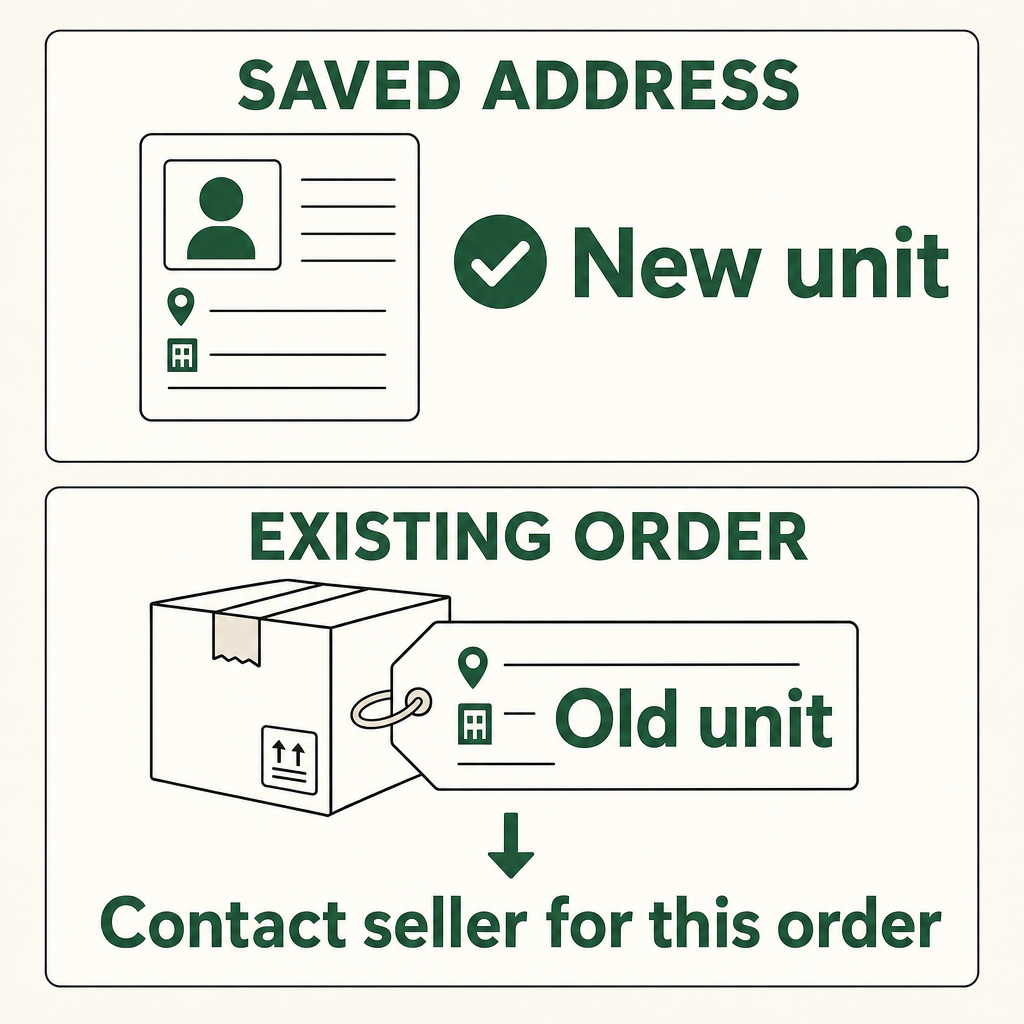
USPS forwarding does not redirect packages carried by UPS, FedEx, or another carrier. A retailer's saved address also does not settle what happens to an order already in progress.
Give delivery services the new unit number and the building's permitted delivery instructions. Avoid adding private door or alarm codes to a public-facing profile.
8. Finish the personal records and old-address cleanup
During the first week, update the people and services that keep daily life working:
- Medical, dental, and other care offices, plus your pharmacy and prescription-delivery account
- Schools, childcare, and emergency-contact records
- Veterinarian, pet microchip registry, and local pet licensing where applicable
- Mobile phone provider, internet account, gym, library, clubs, and professional memberships
- Friends, family, and anyone likely to send important mail
Around 30 days after the move, use forwarded envelopes and recent account activity to catch missed senders. Update each sender directly. Include annual memberships, tax-document senders, and infrequent subscriptions that may not appear in one month's bills.
Keep a small completion log with the organization, address fields changed, effective date, confirmation saved, and remaining action. For example, “bank profile updated” and “replacement card shipment resolved” should be separate entries. Store confirmations securely without copying full account numbers into a shared moving spreadsheet.
Keep a separate reminder for final utility bills and the deposit return. Stop old rent payments according to your actual lease-end obligations, rather than canceling them solely because your boxes have left.
What if the previous renter's mail arrives at your new apartment?
Leave it unopened. For mail correctly delivered to your address but bearing a former resident's name, write “Not at this address” without obscuring the address, then return it to your carrier or a USPS collection box. If the item was delivered to the wrong street address or unit, return it without marking it. These are USPS's misdelivered-mail instructions.
Your own address handoff is complete when important senders have the new details, deadline-sensitive records are updated, and old-apartment bills and refunds have a clear destination. Forwarding is the backup while you get there.
If the apartment search is still taking over your moving calendar, tell us what you need. We'll find matches, call landlords or leasing offices, and book tours. Fairway is free for renters.