Renter prep
How to Check Your Rental History Report Before You Apply
Learn how to check your rental history report, pull the right screening records, spot errors, and fix red flags before you apply.

If you are trying to figure out what a landlord might see, a good place to start is the screening company they use. From there, you can pull your credit reports, look for anything inaccurate or outdated, and clean up the issues most likely to create stress during an application.
One thing that catches a lot of renters off guard: there usually is not one single rental history report that follows you everywhere. Different landlords piece together screening data in different ways. So the goal is less "find the one master file" and more "check the parts of your screening profile that are most likely to matter."
There is not one universal rental history report
When renters say "rental history report," they usually mean the information a landlord sees during screening. In practice, that can include:
- past addresses and lease dates
- rent payment history
- eviction filings or judgments
- collections or overdue balances
- credit information
- notes or verification from previous landlords
Some of that may come from a tenant-screening company. Some may come from the three big credit bureaus. Some may come from court records or direct landlord references.
That is why it helps to think in terms of checking the full screening picture, not hunting for one magic file.
Step 1: Ask which screening company the landlord uses
A simple question before you pay a fee can save you a lot of guessing: Which company do you use for tenant screening?
That matters because the exact report can change by property. One landlord may rely on Experian RentBureau. Another may use a TransUnion-powered screening workflow. Another may use a company like RentGrow.
If you already applied and got rejected, or the landlord asked for a bigger deposit, higher rent, or a cosigner because of a report, federal law says they need to tell you which company supplied that report. That notice is called an adverse action notice.
Once you know the company name, it gets much easier to request the right report instead of guessing.
Step 2: Request the screening report or consumer copy
After you identify the screening company, look for its consumer request page.
For example, Experian RentBureau lets renters request a copy of their rental-history report. The company also says it is smart to ask a prospective landlord which reporting agency they use if you want to see the exact report being checked.
If you were denied because of a screening report, you usually have an even clearer next step. The CFPB says the adverse action notice must explain your right to a free copy of the report from the company named in the notice if you request it within 60 days.
A few helpful notes here:
- Request the current report first. That is usually the fastest way to see what may have affected the decision.
- Do not assume one company covers everything. A landlord may use one screening company and still look at credit or landlord references separately.
- Watch for "consumer file" language. Some companies separate a current screening report from a broader file of records they have about you.
If the landlord is willing to share the report directly, that can save time. If not, request it from the screening company named in the notice.
Step 3: Pull your three credit reports too
Even if the tenant-screening copy looks fine, it is still worth checking your credit reports.
Go to AnnualCreditReport.com and pull your credit reports from Equifax, Experian, and TransUnion. By law, you can get free annual reports there, and the site currently offers free weekly access too.
Why this matters:
- unpaid rent can show up as a collection
- some rent data can feed into credit reporting
- landlord screening often includes credit information alongside rental history
- a mistake on one bureau can still hurt you even if the tenant-screening report looks clean
Check all three, not just one. The information can differ across bureaus.
Step 4: Check the places that usually cause trouble first
You do not need to read every line like a novel. It helps to start with the parts of the report that are most likely to raise questions during screening.
1. Wrong identity details
Check your:
- full name
- date of birth
- Social Security number
- current address
- previous addresses
If the report has the wrong person mixed into your file, everything after that gets harder to trust.
2. Rent payments that are wrong or incomplete
Look for:
- late payments that were actually on time
- balances you already paid
- duplicate negative entries
- missing positive history
A landlord may not panic over one explained bump. What creates more trouble is a report that makes you look less reliable than you really are.
3. Eviction records
This section is worth extra care.
According to CFPB and FTC guidance, you should check whether:
- the eviction record is actually yours
- a dismissed case is shown as if you lost
- one case appears multiple times
- sealed or expunged records are still there
- the record is too old to keep showing up
The FTC says tenant background check companies generally cannot report negative information if it is more than seven years old. That includes most civil lawsuits and judgments, including housing court cases. The same FTC guidance says bankruptcies can be reported for 10 years, and federal law does not set a time limit for criminal convictions. So if you see an older or incomplete eviction-related entry, it is worth reviewing closely instead of assuming it belongs there.
4. Court judgments and collections
If the report lists money you supposedly owe, make sure:
- the amount is correct
- the account belongs to you
- the balance reflects what you already paid
- the record is not outdated
5. Gaps, dates, and address mismatches
A harmless gap can still create friction if the timeline does not make sense on paper.
If you moved in with family for a few months, relocated for work, or had a short-term sublet, it helps to have a simple explanation ready.
Step 5: Dispute errors before you send more applications
If something is wrong, it is usually better to deal with it before you keep paying application fees.
Start by disputing the error with:
- the screening company that created the report
- the company or person that supplied the wrong information, when relevant
- the credit bureau, if the error is also on a credit report
The CFPB says disputes should clearly explain what is wrong and include copies of supporting documents. Depending on the issue, that may include:
- rent receipts
- bank statements
- lease agreements
- payment confirmations
- court dismissal records
- letters from previous landlords
- identity documents
For tenant-screening disputes, the CFPB says the screening or credit reporting company generally has 30 days to investigate, though some cases can take 45 days. Some states impose shorter deadlines.
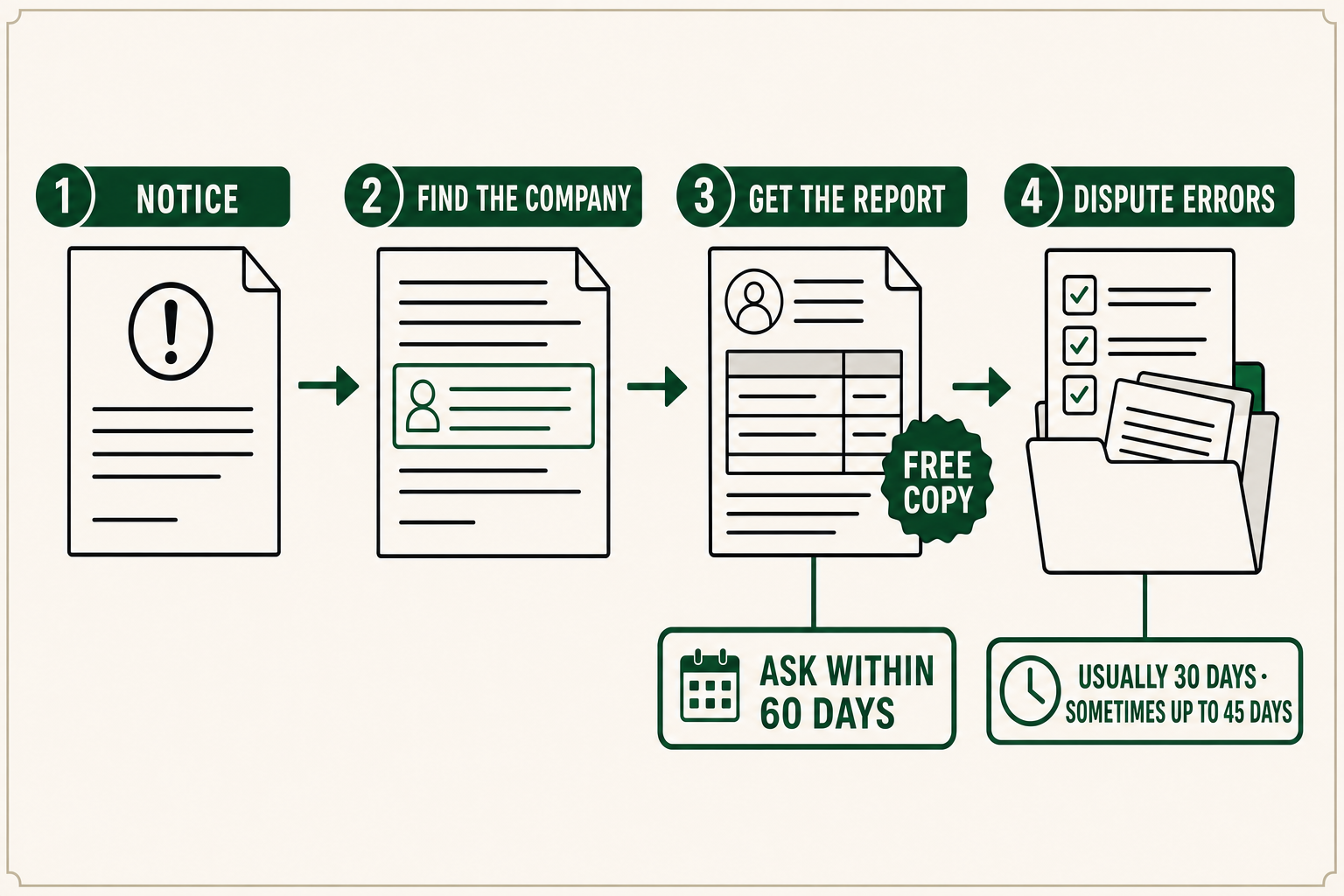
If you are already mid-search, it can help to tell the next landlord the dispute is in progress and offer backup documents. That will not fix every situation, but it can keep a bad report from being the only story they see.
If your history is thin or messy, strengthen the rest of your application
Not every tricky spot is a report error.
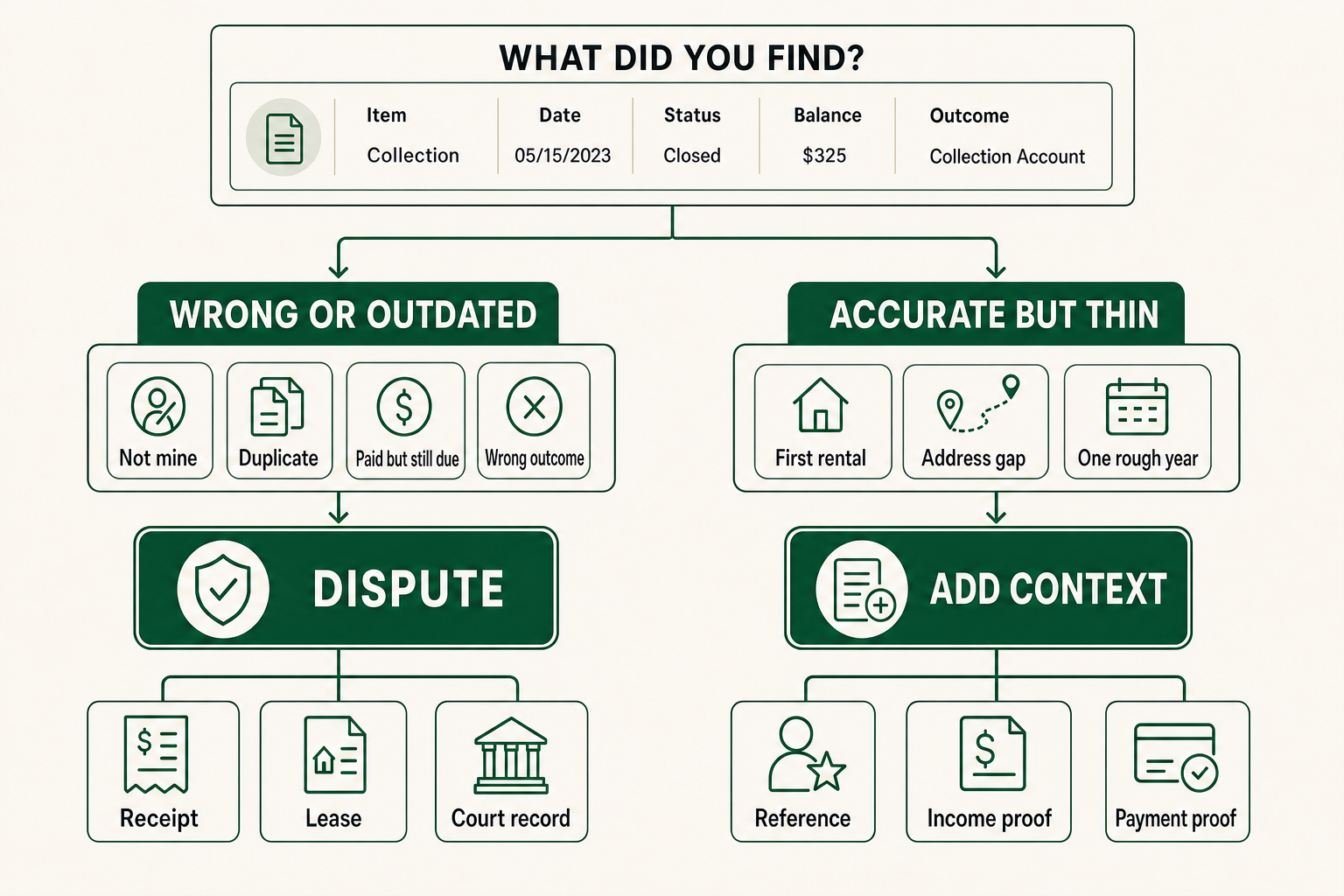
Sometimes the file is just thin. Maybe you are renting your first place. Maybe you have a gap. Maybe you had one rough year that still needs context.
In that case, try to make the rest of the application easier to trust.
Helpful backup pieces can include:
- a reference from a previous landlord
- proof of on-time rent payments
- recent pay stubs or verified income
- a short explanation of an address gap or one-off issue
- proof that an old balance was paid
Keep the explanation short and factual. You do not need a long defense. You just want to make it easy for a landlord to understand what happened and why it is not a current risk.
Quick checklist before you submit another application
Before you pay another fee, it helps to check these boxes:
- I know which screening company this landlord uses.
- I requested the screening report or consumer copy when available.
- I pulled all three credit reports.
- I checked identity details, addresses, payments, evictions, and balances.
- I gathered documents that back up any dispute or explanation.
- I have a landlord reference or proof of on-time payments ready if needed.
That short prep can save you money, stress, and a lot of avoidable rejections.
FAQ
Can I check my rental history for free?
Sometimes, yes, but it depends on which piece you are checking.
- Your credit reports are available through AnnualCreditReport.com.
- If a landlord took adverse action against you because of a screening report, the CFPB says you can request a free copy from the company named in the notice within 60 days.
- Some screening companies also offer their own consumer-report request path, like Experian RentBureau.
What is usually not free is every possible third-party tenant-screening report in the market on demand, all at once.
How far back does rental history go?
It depends on the type of record and where it appears.
The FTC says tenant background check companies generally cannot report negative information if it is more than seven years old. That includes most civil lawsuits and judgments, including housing court cases. Bankruptcies can be reported for 10 years, federal law does not set a time limit for criminal convictions, and state rules can change the details.
If you see a very old eviction, collection, or other negative item, it is worth checking carefully instead of assuming it belongs there.
What if I was denied because of a tenant-screening report?
Ask for the adverse action notice if you did not get one.
That notice should tell you:
- which company supplied the report
- how to contact that company
- that you can request a free copy of the report within 60 days
- that you can dispute inaccurate information
Then get the report, review it line by line, and dispute anything that is wrong or outdated.
Final thought
Checking your rental history before you apply is one of those small prep steps that can save you a lot of money and second-guessing.
You do not need to solve every possible screening issue at once. The useful version is simpler: see what a landlord is likely to see, fix what is wrong, and be ready to explain the spots that need context.
Once your paperwork is in better shape, Fairway is free for renters and can help you compare rentals, stay organized, and move faster through the search and tour-booking side of the process so the whole experience feels less manual.