Phoenix neighborhood guide
Phoenix Neighborhoods: A Renter's Guide to Choosing an Area
Compare Phoenix neighborhoods by commute, rental stock, light rail, heat, daily errands, and total cost to narrow your search with fewer surprises.
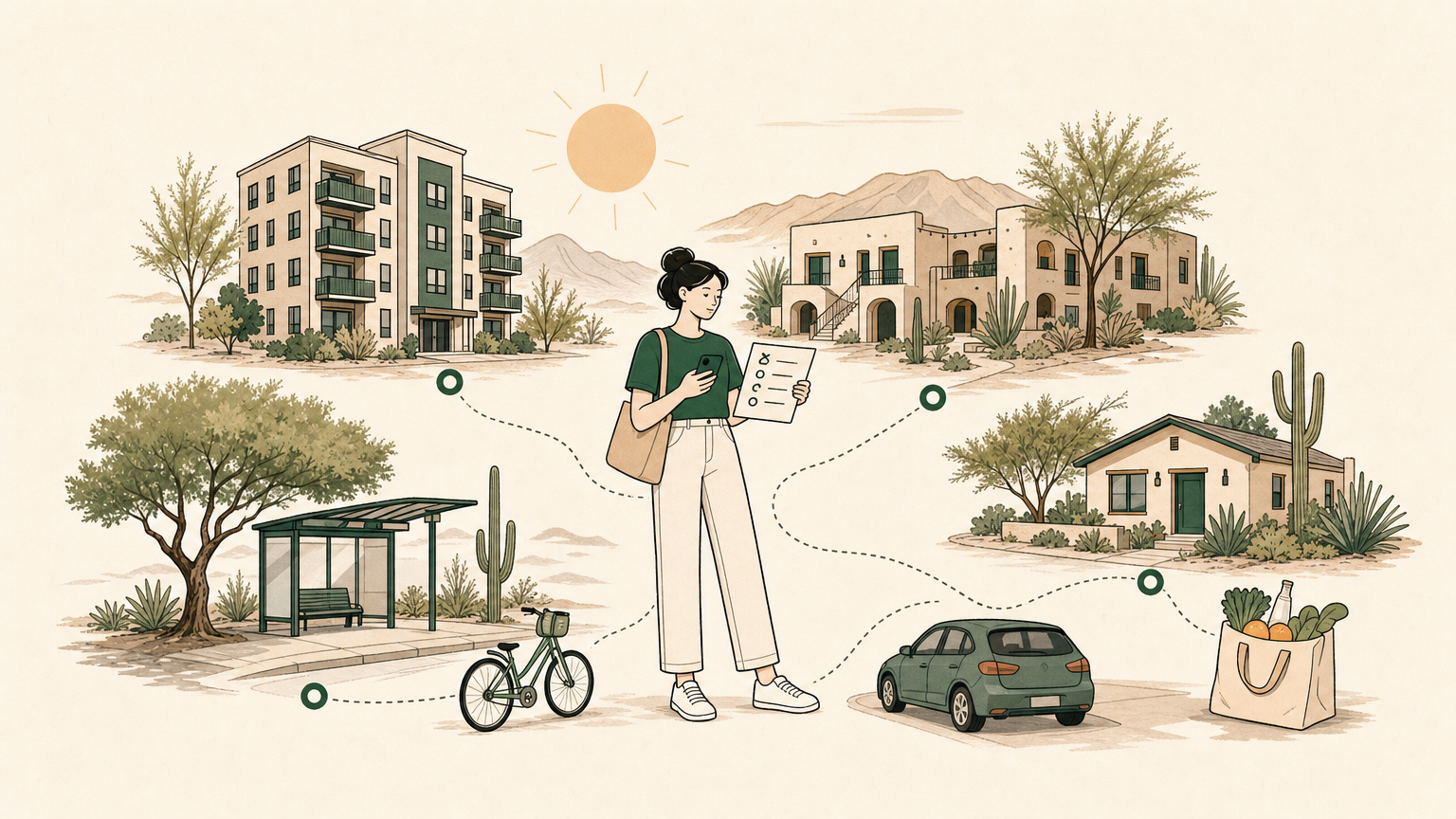
Phoenix is too spread out for “close to downtown” or “near the mountains” to settle a neighborhood decision. A promising pin can still leave you with a difficult commute, an unshaded walk, or the wrong type of rental. A useful shortlist starts with your weekly trips, preferred home type, and tolerance for heat, noise, parking walks, and total monthly cost.
Fairway is live in Phoenix.
How Phoenix defines neighborhoods
Phoenix neighborhood names work at several scales. The city's voter-approved General Plan 2025 organizes Phoenix into 15 urban villages:
- Ahwatukee Foothills
- Alhambra
- Camelback East
- Central City
- Deer Valley
- Desert View
- Encanto
- Estrella
- Laveen
- Maryvale
- North Gateway
- North Mountain
- Paradise Valley
- Rio Vista
- South Mountain
Urban villages are large planning areas. Inside them are historic districts, commercial districts, subdivisions, and informal areas whose edges are less consistent. One listing might say Camelback East, another Biltmore, and a third Arcadia Lite. Camelback East is the urban village. Biltmore and Arcadia Lite are smaller local labels that say more about the immediate setting.
Two other naming traps matter:
- Paradise Valley Village is inside Phoenix. The Town of Paradise Valley is a separate municipality east of Phoenix.
- Scottsdale, Tempe, Mesa, Chandler, Glendale, and Goodyear are separate cities within Greater Phoenix. They are outside Phoenix's neighborhood list.
Where Phoenix light rail goes
Valley Metro changed to a two-line light-rail system when the South Central extension opened in June 2025. Its current system map shows the station-level detail:
- The A Line runs from the Downtown Phoenix Hub east along the Washington and Jefferson corridor, with a connection to the PHX Sky Train at 44th Street/Washington. It continues through Tempe to Gilbert Road/Main Street in Mesa.
- The B Line runs from Metro Parkway through the 19th Avenue, Camelback Road, and Central Avenue corridors. It crosses downtown and continues south on Central Avenue to Baseline Road.
That gives Downtown direct access to both lines. Roosevelt Row, Midtown, Uptown, sections of Alhambra, and the South Central corridor have direct B Line stations. Biltmore, Arcadia Lite, Ahwatukee, Desert Ridge, and much of west Phoenix have no direct light-rail station. A trip from those areas may still work by bus, bike, rideshare, or a drive to a park-and-ride, but that is a different commute from walking to a station.
A station pin is only half the trip. Count the unshaded blocks, major crossings, wait, transfer, and walk at the destination. Phoenix says shade can change hot-weather conditions by up to 30°F, and its shade plan prioritizes places where people walk to work, a bus stop, or a park.
Phoenix neighborhoods at a glance
Phoenix had a typical metro asking rent of $1,722 in Zillow's August 2026 market report. That metro-wide index spans cities, home sizes, and property types. It cannot price a specific one-bedroom in Roosevelt Row against a rental house in Laveen. Our Phoenix rent guide breaks prices out by bedroom count and explains why major rent sources disagree.
Asking rent, concessions, and available listings change throughout a search. The comparison below focuses on location and housing patterns that are more stable.
| Area | Renter context | Common rental stock | Address-level variation |
|---|---|---|---|
| Downtown and Roosevelt Row | City-center jobs, events, restaurants, and direct light rail | Mid-rises, high-rises, studios, condos, loft-style apartments | Event traffic, nightlife noise, parking charges, and the exact station route |
| Midtown and Uptown | Central Avenue access with residential blocks nearby | Apartment towers, mid-rise communities, garden apartments, condos | Direct B Line access varies by address; errands spread out away from Central Avenue |
| Coronado and Garfield | Historic character near downtown | Bungalows, duplexes, casitas, small apartment buildings | Older cooling systems, street parking, and one-off maintenance arrangements |
| Willo, Encanto-Palmcroft, and F.Q. Story | Historic homes and central access | Rental houses, guesthouses, duplexes, small buildings | House-level availability, insulation, plumbing, and electrical capacity |
| Melrose and Alhambra | Seventh Avenue businesses and close-in west-central locations | Courtyard apartments, postwar complexes, duplexes, ranch houses | Renovation quality, shade, laundry setup, and distance to a B Line station |
| Biltmore and Arcadia Lite | Camelback Corridor jobs, dining, and shopping | Managed apartment communities, condos, duplexes, houses | No direct light rail, loosely used Arcadia labels, and property-specific fees |
| North Central, Sunnyslope, Moon Valley, and North Mountain | Mountain access and a mix of central and northern locations | Ranch houses, apartments, townhomes, managed communities | Direct B Line access is limited to specific corridors; housing patterns change by pocket |
| Paradise Valley Village | Northeast Phoenix shopping and access to SR-51-area destinations | Apartment communities, condos, townhomes, houses | No direct light rail and frequent confusion with the separate Town of Paradise Valley |
| South Central and South Mountain | Direct B Line service along Central Avenue and access to South Mountain destinations | Apartments, duplexes, townhomes, detached houses | Rail access drops away from Central Avenue; shade and crossings vary by route |
| Ahwatukee Foothills | South Mountain trails and southeast Valley routes | Apartment communities, townhomes, rental houses | No direct light rail and longer trips around the mountain for many Phoenix destinations |
| Deer Valley, Desert Ridge, and North Gateway | Loop 101 and north-side job or shopping corridors | Apartment complexes, build-to-rent homes, detached houses | No direct light rail, distance from central Phoenix, and recurring community fees |
| Maryvale, Estrella, and Laveen | West and southwest Phoenix routes and several distinct housing patterns | Apartments, ranch houses, townhomes, planned rental communities | Commutes, property age, street pattern, and errands differ sharply across the three areas |
How major Phoenix areas differ for renters
Downtown and Roosevelt Row
Downtown concentrates offices, sports venues, museums, restaurants, and the transfer between the A and B Lines. Roosevelt Row sits on its north side, with galleries, bars, coffee shops, murals, and heavy First Friday activity. The downtown core is more commercial and event-driven.
Rental formats include apartments and condos with pools, package rooms, and rail nearby. Many have no private yard, and parking may carry a separate charge. A bedroom facing Roosevelt Street, a pool deck, or an arena route will have a different noise pattern from one facing a courtyard.
Midtown and Uptown
Midtown and Uptown run north along Central Avenue, though local usage does not produce one universal dividing line. The corridor has B Line stations, apartments, offices, hospitals, and restaurants. A few blocks away, the pattern can switch to detached homes and quieter residential streets.
Rental formats include towers, mid-rises, older garden communities, condos, and houses. An address advertised as Uptown can have direct rail service and still place groceries or weekend destinations beyond a comfortable walk. The station, shade, and errand route belong in the same comparison.
Coronado and Garfield
Coronado and Garfield contain older houses and small buildings close to central Phoenix. Both have bungalows, duplexes, casitas, murals, and neighborhood restaurants. Garfield is east of downtown. Coronado sits farther north around McDowell Road.
Individual properties vary more than a large managed complex. A listing may include a fenced yard or a distinctive floor plan, along with old windows, street parking, a converted room, or one-off maintenance. Cooling equipment and renovation history carry more weight here than a broad neighborhood description.
Encanto's historic districts
Willo, Encanto-Palmcroft, and F.Q. Story place historic homes and mature streets near downtown. Common rental types include detached homes, guesthouses, duplexes, and small apartment buildings. Encanto Park is a major nearby anchor.
Original architecture also raises practical questions. Insulation, window condition, electrical capacity, plumbing, and the cooling setup can vary house by house. A converted garage may have a very different comfort level from the main house.
Melrose and Alhambra
Melrose is centered on Seventh Avenue, with restaurants, vintage shops, nightlife, and low-rise rentals. The Alhambra village extends west and north, with postwar apartments, duplexes, and ranch houses.
One courtyard complex may have mature shade and a full renovation. Another may have uncovered parking, shared laundry across an exposed lot, and original windows. Parts of northern Melrose and Alhambra have direct B Line stations along Camelback Road and 19th Avenue. Many other addresses require a bus connection or another first-mile plan.
Biltmore and Arcadia Lite
Biltmore places renters near jobs, shopping, and restaurants along the Camelback Corridor. Rental stock includes large managed communities and condos. Arcadia Lite, west of Arcadia proper, adds smaller complexes, duplexes, mid-century homes, and residential streets.
The Arcadia name gets applied loosely in rental ads. Arcadia proper is house-heavy. Arcadia Lite listings include duplexes, condos, apartments, and detached homes. Neither area has a direct light-rail station. The actual route to work and errands, parking, pet charges, and community fees can change the result.
North Central, Sunnyslope, Moon Valley, and North Mountain
This broad north-central band changes as it climbs. North Central has larger lots and mature landscaping near Central Avenue. Sunnyslope includes smaller homes, local businesses, and apartments. Moon Valley is house-heavy around its country club. North Mountain includes apartment communities near North Mountain and Shaw Butte trails.
The B Line serves the Camelback Road and 19th Avenue corridors before ending at Metro Parkway. It does not make the whole north-central area rail-accessible. Some rentals, groceries, and trailheads sit well beyond a station walk.
Paradise Valley Village
Paradise Valley Village covers a broad section of northeast Phoenix. Rentals include large apartment communities near major roads, condos, townhomes, and detached homes. Shopping clusters along arterials such as Shea Boulevard, Bell Road, and Tatum Boulevard.
The area has no direct light-rail station. Its road network can work for SR-51 and northeast-side medical or commercial destinations, while a downtown commute follows a different route. Phoenix's Paradise Valley Village is geographically and administratively separate from the Town of Paradise Valley.
South Central and South Mountain
The B Line runs south of downtown on Central Avenue to Baseline Road. Rentals near its stations can offer a direct train into downtown. The larger South Mountain village also contains houses, duplexes, townhomes, and communities closer to parks and trail routes.
The rail corridor is one slice of a wide area. A home east or west of Central Avenue may require a bus transfer or another connection. “Near the preserve” can mean a short drive rather than a walk, so the exact trailhead matters.
Ahwatukee Foothills
Ahwatukee sits south of South Mountain and feels geographically separate from central Phoenix. Rental listings include apartment communities, townhomes, and detached houses. I-10 and Loop 202 carry many trips to the southeast Valley.
There is no direct light-rail station. Trips to Midtown, west Phoenix, or north Phoenix also have to route around the mountain. The mileage on a listing can therefore understate the time and distance of a regular trip.
Deer Valley, Desert Ridge, and North Gateway
These north Phoenix areas line up with different parts of the I-17 and Loop 101 corridors. Deer Valley includes employment and retail near both freeways. Desert Ridge sits farther east near Loop 101. North Gateway reaches the city's northern edge and the Sonoran Desert.
Listings include large apartment complexes, build-to-rent communities, and detached houses. Some communities advertise garages, pools, gyms, and coworking rooms, but technology, trash, amenity, and parking charges can materially change the monthly total. None of these areas has direct light-rail service.
Maryvale, Estrella, and Laveen
West and southwest Phoenix are too varied for a single “budget” label. Maryvale has older apartment complexes and ranch-house neighborhoods west of central Phoenix. The City of Phoenix's Estrella Urban Village extends from the Salt River north to I-10. It is separate from Estrella Mountain Ranch in Goodyear. Laveen combines planned communities with parts of its agricultural landscape.
Maryvale can align with west-side trips. Estrella reaches I-10 and includes major industrial and logistics areas. Laveen sits between the Salt River and South Mountain, giving it South Mountain access, along with Loop 202 connections. Property age, shade, street design, and daily errands vary too much for one description to represent all three.
Apartment-level factors that can change the decision
Two apartments in the same neighborhood can produce very different Phoenix routines. Apply the same six filters to every finalist.
- Cooling and exposure. Record the floor, window direction, exterior shade, HVAC type, and airflow in every bedroom. A top-floor or west-facing unit may cost more to cool. Phoenix rental cooling systems must be capable of reaching 82°F with air conditioning or 86°F with evaporative cooling under the city's cooling ordinance. Those are habitability limits, not comfort targets.
- All-in cost. Add required fees, parking, pet rent, renters insurance, and renter-paid utilities to base rent. Then spread any concession across the full lease. The apartment budget guide has a full worksheet.
- The daily route. Compare work, grocery, pharmacy, child care, gym, and weekend trips at the hours you will use them. Miles hide freeway interchanges, mountain barriers, transfers, and hot walks.
- Parking and shade. Match the actual space to the unit. Covered parking across the property is different from a covered space assigned to you.
- Noise at home. Pool gates, arterial roads, light rail, rooftop bars, dog runs, and HVAC equipment all have patterns. A quiet model unit does not represent every apartment in the building.
- Home type. Historic houses offer character and yards. Large communities tend to centralize maintenance and amenities. Build-to-rent homes often pair newer systems and private outdoor space with a longer fee list. Compare the trade-off you will live with every day.
Safety and schools depend on the address
Broad “safest neighborhood” rankings often use ZIP-code grades and apply them to smaller areas. That can hide differences between blocks, apartment complexes, parking structures, and times of day.
The Phoenix Police community crime map lets you query selected reported incidents around an address and explains the data's limitations. Incident patterns are one part of the picture. Property lighting, access control, package handling, the parking route, and after-hours maintenance are address-level factors. No neighborhood label guarantees safety.
School comparisons need the same precision. Phoenix has 30 school districts, and attendance boundaries do not follow informal neighborhood names. A residential address determines the resident attendance area and school. The city's school district maps show district and attendance-zone geography.
Arizona's open-enrollment law also allows families to apply to a school outside their resident attendance area, including one in another district. Admission depends on available capacity and the district's published process. The resident school tied to an address and a school reached through open enrollment are two separate parts of the housing decision.
The useful choice is the address that supports an ordinary Tuesday, including the commute, grocery run, cooling bill, parking walk, and trip home after dark. When you are ready to compare live listings against that full brief, start your Phoenix rental search.