Apartment search
Apartment Hunting Tips: A Step-by-Step Guide to Finding the Right Place
Use these apartment hunting tips to set your budget, track listings, compare total costs, tour carefully, avoid scams, and choose the right place.
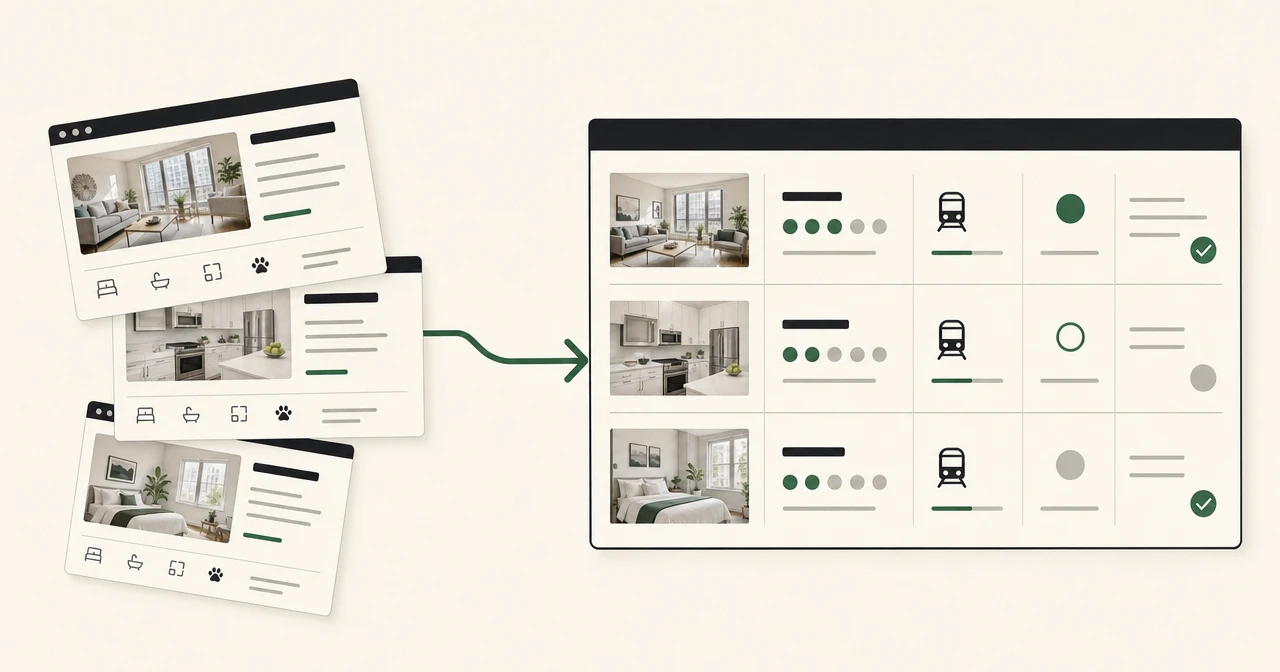
Apartment hunting gets exhausting when the work lives everywhere: one site's saved list, another site's alerts, half-answered texts, tour notes on your phone, and fees you only learn about after you fall for the kitchen.
Use one repeatable system: set your rules first, collect every apartment in one place, confirm deal-breakers before touring, inspect each unit with the same checklist, and compare full costs before applying. This cuts wasted time and keeps your decision anchored in facts instead of whichever apartment you saw last.
The apartment hunting checklist
- Set an all-in monthly limit and a separate move-in cash limit.
- Pick a move window, a real commute boundary, and three to five must-haves.
- Search a few different listing sources and turn on narrow alerts.
- Save each physical unit once, along with its current status and your next action.
- Confirm major fees, rules, and screening criteria before spending time on a tour.
- Verify who is offering the unit, then tour the exact apartment with the same checks every time.
- Compare total cost and lease terms, then apply through the official route.
1. Set your apartment budget, move window, and must-haves
The first attractive listing has a way of turning every preference into a negotiation. The rent is a little high, the commute is a little long, but look at those windows.
Decide what works before a listing gives you reasons to ignore your own limits.
Build two budgets
Start with two different numbers:
- Your monthly all-in ceiling: base rent, required monthly fees, realistic utilities, parking or pet charges, renters insurance, and any meaningful change in transportation costs.
- Your move-in cash ceiling: application costs, nonrefundable fees, deposits, prepaid rent, moving expenses, and setup charges.
Keep refundable deposits separate from actual expenses. You still need the cash to move in, but a refundable deposit is not the same as an application or broker fee you will not get back.
The familiar 30% rule can be a rough screening tool, but it cannot see your childcare costs, debt, medical expenses, savings goals, or commute. A better starting point is a real household budget. The Consumer Financial Protection Bureau's monthly budget worksheet works from income minus actual expenses rather than handing everyone the same rent percentage.
Define your move window and real commute boundary
You can learn the market before apartments for your exact move date appear. Use that early period to check your current lease, watch prices, research neighborhoods, prepare documents, and ask likely buildings when they normally release availability.
Then switch into active-search mode when comparable units for your move date start appearing. There is no universal 30-, 60-, or 90-day window. Local notice rules, campus calendars, property type, and market speed all change the timing.
Treat location as time and money, not miles. Test the trip at the hour and by the mode you would actually use. Add transfers, tolls, parking, or the last walk from the station. A cheaper apartment can stop being cheaper when it adds a car payment or five expensive rideshares every week.
Season matters, but it is a tradeoff rather than a secret bargain date. Zillow's analysis of 2024 national rental data found more selection and competition in summer, then fewer choices and lower rents in winter. City patterns differed, and a job start or lease deadline matters more than winning a theoretical winter discount.
Pick your must-haves and rank your flex points
Choose three to five genuine constraints. These might include:
- enough bedrooms for the household
- an accessible route or specific in-unit access feature
- a pet policy that works for your pet, or an accommodation process if you use an assistance animal
- a maximum peak-time commute
- required parking
- a move-in date you cannot change
Everything else begins as a preference. More importantly, decide what bends first if the search is too narrow. You might expand the radius before raising the budget, give up a gym before losing in-unit laundry, or accept less square footage before adding another commute transfer.
Searching with a partner or roommates? Settle the all-in maximum, bedroom split, lease names, utilities, pets, guests, and what happens if someone leaves early. It is much easier to have that conversation before one person becomes emotionally attached to Apartment B.
2. Search broadly without creating tab chaos
Zillow's 2025 renter research found that the typical recent renter who searched online used five sites or apps. Cover a few different listing networks, then organize every viable unit in one tracker so you are not refreshing multiple feeds all day.
Use a varied source mix, not every app
Try two or three large listing platforms from different networks, then add one local channel. Depending on your market, that could be a property manager's own site, an employer or campus housing board, a neighborhood group, word of mouth, or a walk past local For Rent signs.
Set one precise alert for the ideal fit and one slightly broader alert for the fallback. Broad alerts with no real filters mostly create homework.
Treat every alert as a lead, not proof. Listings get copied, syndicated, renewed, edited, and left up after a unit is gone.
Save each unit once
Use the street address plus unit number as the identity. If the same apartment appears on three sites, keep all three links in one record instead of creating three choices.
Your tracker does not need to be fancy. A shared sheet, notes database, or simple board works if you will update it from your phone. Keep these fields:
- address and unit number
- property or management company
- source links
- listed rent, required fees, and utility notes
- availability and target move date
- must-have fit
- date first seen and date last verified
- contact name and channel
- current status
- next action and date
- tour or application date
- pros, concerns, and final reason for passing
A practical status line is new -> availability confirmed -> contacted -> tour scheduled -> toured -> applied -> decision. Archive anything that is unavailable, unresponsive after a reasonable follow-up, outside your limits, or no longer worth revisiting.
The last verified field matters. A price or availability mismatch across sites can be suspicious, but it can also be a delayed update. Confirm the exact unit through a known property channel before you travel or pay.
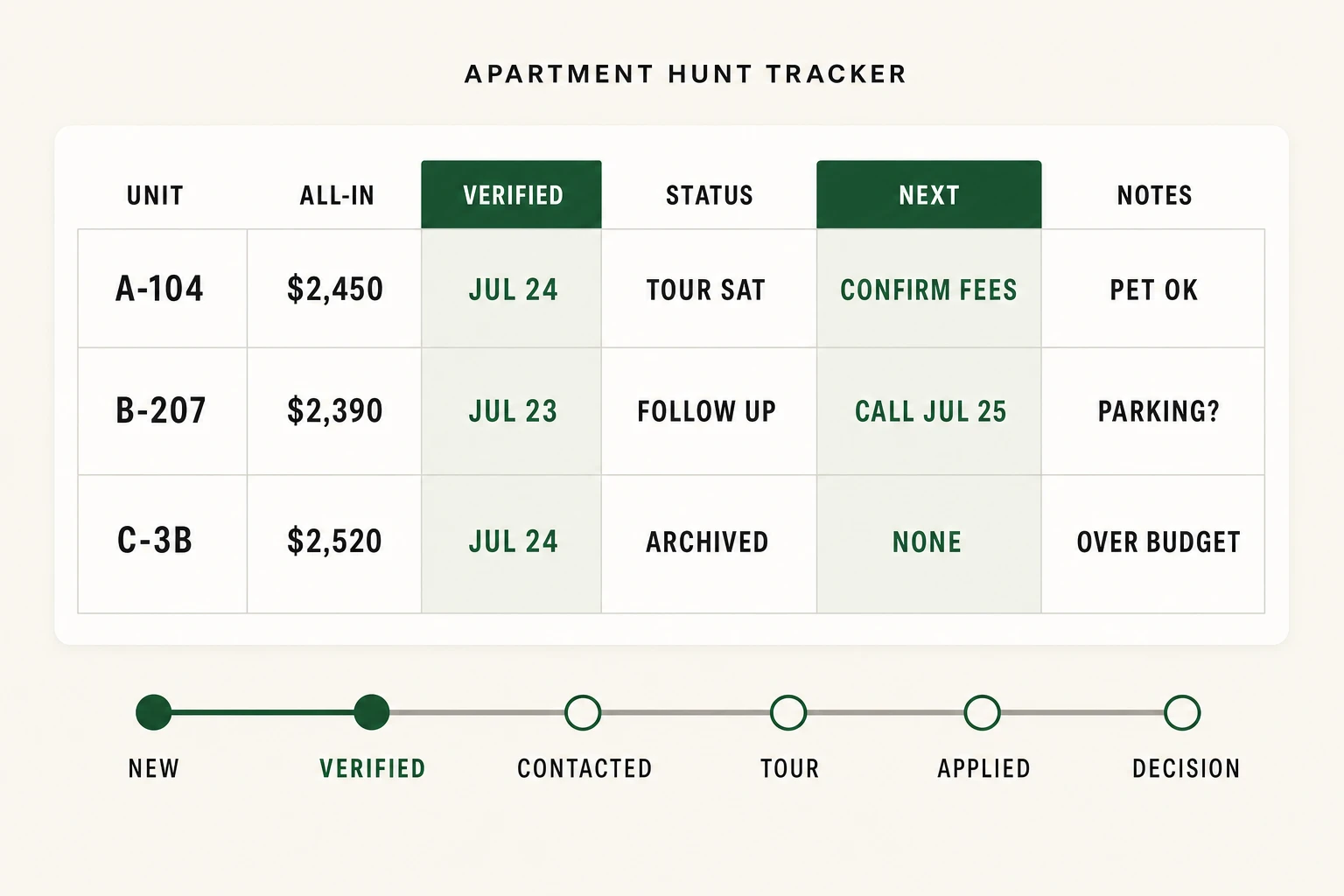
Give every inquiry a next action
Your first message should be easy to answer. Name the exact unit, give your move date, offer two tour windows, and ask one or two unanswered deal-breaker questions.
For example:
Hi, I am interested in Unit 4B at 125 Main Street for an August 15 move. Is that exact unit still available? I could tour Tuesday after 5 p.m. or Wednesday from noon to 2. Could you also confirm whether parking is required or optional?
Record the message as soon as you send it. If the property gives a response window, follow that. If not, one calm follow-up after a couple of business days is reasonable. Then keep the rest of your search moving. Repeatedly chasing a silent listing is not persistence; it is a stalled queue.
3. Confirm the deal-breakers before you tour
A tour should answer questions that photos cannot. It should not be the moment you learn that every adult owes a nonrefundable fee or that your dog is outside the property's policy.
Before you schedule or travel, ask:
- Is this exact advertised unit available for my target date?
- What is the lease term?
- What is the required monthly total beyond base rent?
- Which application, screening, holding, deposit, admin, and move-in charges apply? Which are refundable?
- Does each adult submit a separate application and fee?
- What income, credit, rental-history, or guarantor criteria are used?
- Which documents are required, and where are they uploaded?
- Are there hard rules on pets, parking, roommates, smoking, accessibility needs, or move-in timing?
- Is the advertised price tied to a particular lease length or special?
Keep an application kit ready, but do not broadcast it. A reusable fact sheet can hold your move date, employment details, rental history, references, pet information, and co-applicant details. A separate secure folder can hold identification, proof of income, and other documents that a verified property actually requests.
Do not attach pay stubs, an ID image, bank records, or a Social Security number to an opening message. Verify the property, recipient, and application route first.
A quick note on renter rights
For most covered housing in the United States, the Fair Housing Act prohibits housing discrimination based on race, color, national origin, religion, sex, familial status, and disability. Disability protections can include reasonable accommodations to policies. State and local laws may protect additional groups or create different application and fee rules, so use your state housing agency, attorney general, or local renter guide for the details that apply where you live. This is general information, not legal advice.
4. Verify the listing and provider before you tour, apply, or pay
A real address is not the same as a real offer. Scammers copy legitimate photos, descriptions, company names, and even self-tour instructions.
Use a short verification gate:
- Search the full address. Compare the unit, price, photos, availability, company, and contact details across the company's own site and other sources.
- Verify the provider independently. Use the management company's official website and a phone number you found yourself. For a private landlord, compare the claimed owner with city or county property records. If an agent is involved, check the relevant state license database.
- Use the official application and payment route. Confirm the exact unit and the person's authority before sending sensitive data, an application fee, a deposit, or rent.
Stop if someone pressures you to pay before a credible viewing, the story fails an independent call, the payee does not match the verified owner or manager, or the contact insists on a wire transfer, gift cards, cryptocurrency, or an unverified payment-app account. The FTC's rental-scam guidance explains these checks and why a self-tour alone is not proof.
A tour, working key, polished lease, HTTPS connection, or familiar payment method can all be faked or misused. Verify the provider and payment route before sharing sensitive information or paying. A legitimate screening process may still need sensitive information once those checks pass.
For a deeper before-you-pay check, use Fairway's guide to avoiding rental scams.
5. Tour and inspect the exact apartment
Confirm that the unit you are walking through is the one you would lease. A model unit can show a floor plan. It cannot show your actual view, light, noise, appliances, water pressure, or neighbor-facing bedroom wall.
Bring your phone, a charger, a tape measure, and the same checklist to every tour. With permission, test the things you will depend on.
Test function, not finishes
- Run hot and cold water, flush toilets, and watch how quickly sinks and tubs drain.
- Test representative outlets with your charger, plus lights and switches.
- Open, close, and lock windows and exterior doors.
- Try the appliances included with the unit and make sure their doors can fully open.
- Check under sinks, around windows, near vents, along baseboards, and beside appliances.
- Ask who controls the heating and cooling and when those systems operate.
- Look for smoke and carbon-monoxide alarms, clear exits, stair rails, and working building-entry controls.
- Measure the walls, doorways, and clearances that matter to your furniture.
- Test cell reception and check which internet providers can serve the exact address.
Your eyes are only part of the inspection. The Environmental Protection Agency's multifamily guidance flags water stains, peeling material, damp spots, musty odors, leaks, and window condensation as signs of a moisture problem worth investigating. Fresh paint is not an answer to an active water source.
If reliable internet matters, follow the FCC's National Broadband Map instructions to check provider-reported address-level availability, confirm service and installation timing directly with the provider, and test mobile signal inside the unit. The FCC notes that its mobile coverage layers do not show indoor coverage.
Inspect the route into daily life
Walk the path from parking or transit to the apartment. See the laundry room, mail and package area, trash setup, stairs or elevator, bike storage, and any amenity you would pay for.
Then look beyond the building. Try the actual commute. Check the trip to groceries, childcare, healthcare, or other places you use every week. If the apartment is a finalist and you can do it safely and conveniently, revisit the block at a different time to notice traffic, lighting, parking demand, and noise that a weekday noon tour may hide.
Under federal lead disclosure rules, for most rentals in housing built before 1978, the landlord or agent must, before you sign the lease, disclose known lead-based paint and hazards, provide available records, give you the federal lead pamphlet, and include a lead warning statement. If flood risk matters at the address, use current government flood mapping rather than trying to infer it from one dry-day tour.
Separate what you observed from what you were told
Label photos and notes with the address, unit, date, and room. Then keep three simple columns:
- Observed or tested: the water ran hot, the windows locked, the bedroom measured 10 by 11 feet.
- Claimed: management said the parking waitlist usually moves quickly.
- Promised in writing: the damaged window will be replaced before move-in.
This keeps a friendly tour comment from becoming a feature in your comparison. Put repairs, concessions, included services, and exceptions in the signed lease or an addendum whenever possible.
A live video tour is better than a prerecorded walkthrough because you can ask to see the unit number, inside cabinets, the view, and water running. It still does not prove that the person showing the home is authorized to rent it. Unit verification and provider verification are two separate checks.
6. Compare total apartment costs and lease terms
Complete your notes before the next tour. Memory gets very generous with the apartment that had great light and very vague about the one with the lower monthly total.
Compare three different numbers
For every finalist, calculate:
- Effective monthly occupancy cost: contract rent scheduled over the initial lease, plus required recurring fees, estimated tenant-paid utilities, and one-time nonrefundable charges that apply to you, minus written credits, divided by the number of lease months.
- Cash required before move-in: every amount due before you get possession, with refundable deposits labeled separately.
- Normal paid-month amount: the contract rent, required recurring fees, and estimated tenant-paid utilities due in a month when no concession credit applies. Treat renewal rent as unknown until it is offered in writing.
Count prepaid first or last month's rent in move-in cash, but do not add it again on top of scheduled lease rent when calculating effective monthly cost.
Upfront costs can reach thousands of dollars even when the monthly rent fits your budget. Harvard's Joint Center for Housing Studies calculated a $3,670 example from median application, deposit, and rent figures for a renter charged an application fee, security deposit, first month, and last month. Your actual total will depend on the market and property.
Ask for a complete written fee schedule. Include mandatory amenity, technology, trash, pest, package, parking, pet, payment-processing, insurance, and utility administration charges where they apply. Then ask how water, heat, electricity, and other shared utilities are calculated.
Normalize every special over the exact lease
Rental concessions are common enough to compare carefully. Zillow reported that 39.8% of its rental listings offered a concession in April 2026, though the share varied sharply by city.
Suppose a 12-month lease lists at $2,400 with one month free. The simple rent average is $2,200 per month:
($2,400 x 11 paid months) / 12 lease months = $2,200
But you may still owe $2,400 in each paid month. Confirm the contract rent, exact credit schedule, lease term and eligibility conditions, any repayment rule after early termination, deposit amount, qualification standard, and how any percentage-based late fee is calculated. Do not assume the discounted average sets the renewal rent; future renewal pricing is unknown until offered in writing.
Read lease rules as future costs
Use advertised terms and written policies for a preliminary comparison, then compare the actual lease with every written promise and applicable state or local law. A lease term may be unenforceable even if it appears in the document. Look for:
- renewal and rent-increase language
- notice deadlines and automatic renewal
- early termination or buyout terms
- sublet, roommate, guest, pet, and occupancy rules
- utility and maintenance responsibility
- required insurance
- payment methods and processing fees
- move-out, cleaning, and restoration expectations
A lower first-year average may be a bad trade if the lease does not fit a likely job move, roommate change, pet, or travel pattern. Fee limits and enforceability vary, so check an official state or local renter resource when a term looks wrong or unclear.
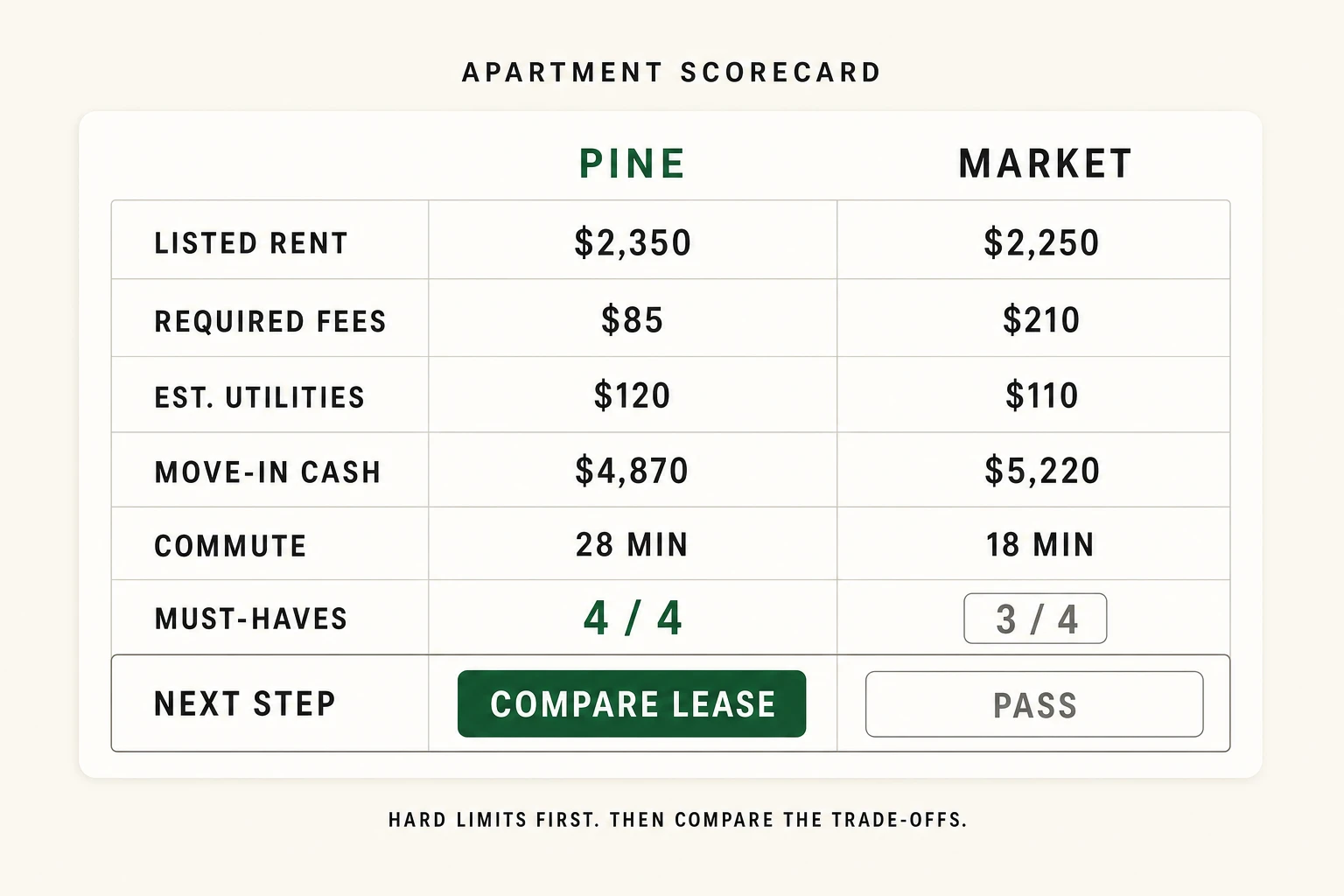
Use one scorecard after every tour
Start with pass/fail deal-breakers. A rooftop deck cannot compensate for rent you cannot sustain or an entrance you cannot use.
Then score the remaining apartments on the same factors:
- all-in cost and lease terms
- commute and routine errands
- unit condition and function
- light, noise, temperature control, and airflow
- layout, dimensions, and storage
- internet and mobile connectivity
- maintenance, access, and common areas
- personal fit
Keep the facts beside the score. A 4 should mean the same thing for every apartment, and a promised repair should not count as completed.
7. Apply quickly without letting urgency make the decision
Once a unit passes your criteria, tour, cost comparison, and verification, move promptly through the verified application route. Upload only what the property requests. Follow the review timeline they give you, then send one concise status check if it passes while keeping other viable options active.
Before signing, match the lease against your record:
- exact address and unit
- rent and full fee schedule
- concession amount and payment timing
- deposit and refund terms
- start and end dates
- utilities and services included
- repairs or changes promised in writing
- pet, parking, guest, roommate, and sublet terms
- every applicant and authorized occupant
If a landlord denies your application or offers less favorable terms, such as higher rent, a larger deposit, or a required co-signer, based in whole or in part on a tenant-screening report, federal law requires an adverse-action notice. The Consumer Financial Protection Bureau explains that the notice may be written, oral, or electronic and must give the screening company's name, address, and phone number; explain that you can request a free copy from that company within 60 days; and explain your right to dispute inaccurate information. Fairway's guide to checking your rental history report walks through that process.
Give yourself one final pause. Would this apartment still win without the staged furniture or “today only” pitch? Can you handle a normal paid month, not just the advertised average? Does the written lease match the version you scored?
Let the system carry the busywork
The best apartment hunt is not the one with the most tabs. It is the one where every option faces the same budget, questions, tour checks, and next action.
Try the system on your next three viable listings. Save each one once. Confirm the big unknowns. Finish the same scorecard after every tour. The comparison gets much calmer when the facts are already in front of you.
Fairway is a free AI agent for renters currently serving the SF Bay Area that can take on some of the manual work. Tell it what matters, and it can watch listings, surface fees, contact landlords or leasing offices, and help book tours. You still make the decision and verify the details. Fairway handles more of the refreshing and phone tag.