Renting basics
How to Rent an Apartment: 8 Steps From Budget to Move-In
Learn how to rent an apartment in eight steps, from budgeting and searching to applying, reviewing the lease, and documenting your move-in.

Renting an apartment is a chain of small decisions: what you can afford, where to look, which unit to tour, what to send with the application, and what the lease actually says. The hard part is that those decisions live across listing tabs, calls, fee sheets, screening portals, and a document you may see only after approval.
The basic process is straightforward. Set your budget, choose your constraints, prepare your application file, search and verify listings, tour the exact unit, apply through the official route, read the lease, and document the apartment when you get the keys. The details vary by property and location, so treat this as a renter roadmap rather than a universal rulebook.
The apartment renting process at a glance
- Set two limits: your all-in monthly housing ceiling and the total cash you can spend before move-in.
- Choose your search: decide the move window, area, must-haves, and acceptable tradeoffs.
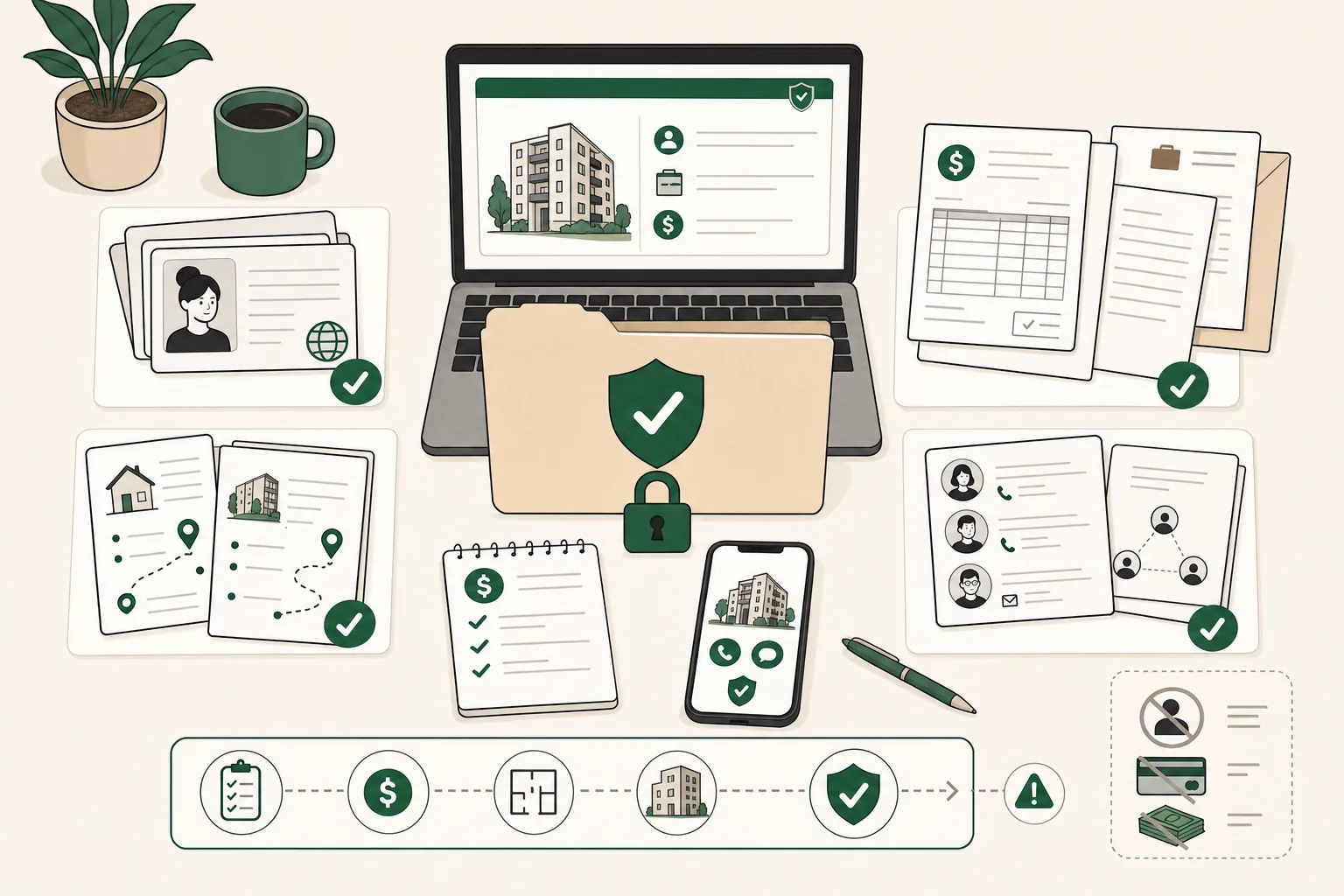
- Prepare your application file: gather the identity, income, address, and reference information a property may request.
- Search and verify: track the exact unit, full price, official contact, and next action in one place.
- Tour the apartment: inspect the unit you would lease and put fees, repairs, and promises in writing.
- Apply through the official route: read the screening authorization, save the fee terms, and keep a copy of what you submit.
- Review the lease: confirm the full economics, rules, responsibilities, renewal terms, and move-in commitments before signing or paying.
- Prepare and document the move: arrange utilities and insurance, confirm key handoff, and record the empty apartment before unpacking.

1. Set two limits before you open listings
An advertised rent is not a budget, and it is definitely not the amount you need to get the keys. Start with two numbers before a bright kitchen or rooftop view makes every limit feel negotiable.
Your all-in monthly ceiling
Build this number from actual take-home income and real expenses. Review a few ordinary months and account for food, transportation, debt payments, health care, child care, savings, and irregular bills. Consumer.gov's budget method is simple: list monthly income and expenses, then make sure the result stays above zero. For variable income, test the apartment against a conservative month, not your best one.
Next, subtract the housing costs that sit beside base rent:
- required utilities and internet
- mandatory package, technology, pest-control, trash, or amenity charges
- parking or storage
- renters insurance
- pet rent
- realistic laundry costs
- any meaningful change in commuting costs
The familiar 30% of gross income guideline can be a quick comparison point. It cannot see your debt, medical costs, child care, unstable income, or savings goals. Use your cash flow to choose what feels sustainable, then ask the property how its own screening standard is calculated.
When you request a quote, ask for the total required monthly price. Confirm which utilities you pay, whether fees are mandatory, which lease term the quote assumes, and whether a free-rent concession hides a higher rent in the lease. Compare the discounted first-term cost and the undiscounted rent separately.
Your cash-to-keys ceiling
Upfront charges have different purposes and refund rules. Keep them separate so you know what you are paying for.
| Stage | Possible costs | What to confirm |
|---|---|---|
| Applying | Application or screening fee | Per adult? Charged when? Refundable if the application is not reviewed? |
| Reserving | Holding deposit | What makes it refundable, credited, or forfeited? |
| Signing | Security deposit and prepaid rent | What rental period does each payment cover? Which amount may be refundable? |
| Pets and property | Pet, key, parking, storage, move-in, or administrative charges | One-time or monthly? Required or optional? Refundable or not? |
| Setup | Utility deposits, connection charges, and renters insurance | Which accounts or proof must be active before keys are released? |
| Moving | Movers, truck, supplies, storage, overlap, and immediate essentials | Which costs must be paid before move-in day? |
Ask for each amount, purpose, due date, payment method, and refund condition in writing. A security deposit is not the same as a nonrefundable fee, even if both leave your account on the same day.
Application-fee limits, permissible deposits, up-front charges, and refund rules vary by state and city. USAGov's tenant-rights directory is a useful starting point for finding the right state agency or local legal help.
2. Choose the move window, search area, and real must-haves
Now decide what the apartment must do for your life. If Phoenix is your target, use the Phoenix neighborhood guide to compare the daily trade-offs.
Pick a target move-in window, then draw a realistic search boundary around work, school, child care, health care, transit, and the people or services you rely on. Check the route at the time you would actually travel. A 25-minute map estimate on Sunday morning is not the same commute on Tuesday at 8:15.
Write down three to five nonnegotiables. They might include:
- a bedroom count that works for the household
- an accessible route or specific in-unit feature
- a pet policy or needed assistance-animal accommodation
- a maximum commute or transit requirement
- reliable parking
- a move-in date you cannot change
Then rank what can bend. Would you choose an older building before raising the budget? Expand the area before accepting a longer lease? Give up a gym before in-unit laundry? These choices are easier before a listing feels like the one.
Renting with a roommate or partner adds another decision layer. Agree on the all-in limit, rent split, lease names, pets, guests, utilities, and what happens if someone wants to leave early. A roommate agreement can reduce confusion between roommates, but the lease determines what the landlord can hold each signer responsible for.
Fairway's apartment hunting guide goes deeper on building a search tracker and comparing finalists without creating another pile of tabs.
3. Prepare your apartment application file
There is no single document packet that every U.S. landlord uses. Ask the property for its written screening criteria and exact document list before you pay or submit anything.
A flexible application file can include:
- Identity: a current government-issued photo ID and the exact legal name and birth date used in official records.
- Income or financial support: recent pay stubs and, when relevant, an employment or offer letter, benefit statement, tax return, W-2 or 1099, self-employment records, or other proof the property accepts.
- Rental history: current and previous addresses, lease dates, and landlord contact information.
- References and co-applicants: requested references, information for every adult applicant, and guarantor or co-signer details if needed.
- Household details: proposed occupants, pets, vehicles, and target move-in date when requested.
If your income is new, irregular, self-employed, or not wage-based, ask which alternatives the property accepts. If your credit file or rental history is thin, ask whether a guarantor, co-signer, stronger income documentation, or another lawful option is available. Do not assume one solution works at every property.
Check your three credit reports early enough to correct mistakes. AnnualCreditReport.com is the authorized site for the free reports guaranteed by federal law. Your credit reports are not the same as a specialty tenant-screening report, so also ask which screening company the property uses and what it will review.
Applications contain identity-theft-grade information. Verify the property manager, exact unit, and official application channel before sending an ID image, Social Security number, pay stubs, or bank records. Use the property's secure route and ask before redacting fields it may need to verify.
Fairway's guide to checking your rental history report explains how specialty screening files differ and what to review before an application deadline.
4. Search broadly, track candidates, and verify the provider
Search across more than one listing marketplace. Add building and property-management websites, trusted local resources, referrals, and eligible housing-program sources when they apply to you.
Discovery is not verification. Keep one record for each exact unit with:
- address and unit number
- original listing link and date
- independently verified manager or owner contact
- rent, lease term, concession, and move-in date
- mandatory monthly charges and estimated utilities
- application, holding, deposit, and move-in amounts
- screening criteria and required documents
- tour status, notes, next action, and deadline
Before you share sensitive data or money, search the full address. Look for conflicting prices, contacts, or a for-sale listing. Find the management company's website and phone number independently rather than trusting the link or number in the ad. For a private owner, check official local property records and verify the person's identity and authority to rent the home.
A self-guided-tour code does not prove the person messaging you is legitimate. The Federal Trade Commission warns that scammers copy real listings, change the contact details, and sometimes exploit real self-tour systems. Stop if the address, unit, price, company, contact, or payee does not line up.
Use the verified property's official payment route and a method that leaves a traceable record. Do not pay an unverified contact by wire, gift card, cryptocurrency, or cash. Fairway's before-you-pay rental scam checklist covers the fuller verification and recovery process.
Fairway is free for renters and can take on some of the search busywork: watching listings, surfacing fees, contacting leasing offices, and booking tours. The goal is fewer refreshes and less phone tag, not skipping your own review of the unit, application, or lease.
5. Tour the exact unit and confirm the full deal
A model unit can show the floor plan. It cannot show the exact apartment's light, view, noise, water pressure, appliances, locks, or neighbor-facing bedroom wall.
When possible, tour the unit named in the lease, either in person or through a live virtual apartment tour. Use the same apartment viewing checklist each time so a polished lobby does not outweigh the things you will live with.
Check the things that have to work
- Open, close, and lock exterior doors and accessible windows.
- Run hot and cold water, flush the toilet, and watch how sinks and tubs drain.
- Test representative lights and outlets with permission.
- Try included appliances and the heating or cooling controls.
- Look around ceilings, windows, sinks, vents, cabinets, and baseboards for stains, dampness, pests, or unfinished repairs.
- Check smoke and carbon-monoxide alarms where applicable, usable exits, laundry, parking, mail, packages, trash, and building access.
- Confirm internet options, cell signal, storage, accessibility, and the real route to transit or parking.
Do not test an outlet that is cracked, loose, scorched, warm, wet, sparking, or near exposed wiring. Report it and keep clear. This tour list helps you compare units; it is not a substitute for a local inspection or building-code review.
Confirm the application gate before paying
Before an application fee leaves your account, ask:
- Is this exact unit available for my move date?
- What is the total required monthly price?
- What cash is due at application, approval, signing, and key pickup?
- What are the written income, credit, rental-history, occupancy, pet, and guarantor criteria?
- Which documents does each adult need?
- How are applications ordered and when is the fee charged?
- Is any fee or holding amount refundable if the application is not reviewed or approved?
- How long does this property usually take to decide, and how will it notify me?
Ask which problems will be fixed before possession. Put the specific repair and completion date in writing. A friendly promise during a tour is not a lease term.
6. Apply through the verified route
Read the form and screening authorization before submitting. Confirm the unit, price, fee terms, and move date one more time. Send only what the verified property requests through its official secure channel, and save:
- the listing and written screening criteria
- the application and authorization you submitted
- the fee and refund terms
- receipts and confirmation messages
- the unit, contact, and promised decision timing
There is no reliable national answer for how long apartment approval takes. A complete, accurate application may move faster, but timing depends on the property, screening company, references, documents, market, and local process. Ask the property for its normal range and follow-up method.
If screening changes the decision
A rejection is not the only unfavorable decision. If a third-party consumer report contributes to a denial, higher rent, larger deposit, or co-signer requirement, federal law requires an adverse-action notice. The notice identifies the reporting company and explains your report and dispute rights.
The Consumer Financial Protection Bureau explains that you can request a free copy from the named company within 60 days. Check whether the record belongs to you, whether cases are duplicated, whether outcomes and payment status are accurate, and whether old, sealed, or expunged records appear improperly. Dispute inaccurate or incomplete information and tell the property a dispute is underway.
Those particular federal notice rights apply when a consumer report played a part. Do not assume every decision based only on the landlord's direct review of documents or observations triggers the same process. State or local law may add protections.
7. Read the lease before you sign or pay move-in funds
Approval is permission to review the deal, not a reason to stop reading.
Get the full lease and every addendum. Reconcile them with the listing, quote, fee sheet, tour notes, concessions, and repair promises. Confirm:
- People and place: every responsible party, exact unit, parking or storage, and management contact.
- Term and possession: start and end dates, key date, renewal, notice, and what happens if the unit is not ready.
- Money: rent, due date, payment method, grace period, late charges, mandatory fees, deposit, prepaid rent, utilities, and concessions.
- Occupancy: named occupants, roommate liability, guests, subletting, pets, smoking, and noise rules.
- Repairs and access: maintenance responsibilities, emergency process, alterations, locks, and landlord entry.
- Insurance and liability: required coverage, proof deadline, limits, and exclusions that matter to you.
- Exit terms: early termination, assignment, replacement roommates, move-out duties, and key return.
Put every negotiated change, exception, concession, and repair commitment into the signed lease or a signed addendum. Do not leave unexplained blanks. Keep the fully executed documents, receipts, and important messages somewhere you can reach outside the apartment.
For most housing built before 1978, federal rules require the landlord or agent to provide the EPA lead pamphlet and disclose known lead paint or hazards before you sign, subject to exceptions. The EPA's disclosure page explains the scope; the rule generally does not require the landlord to conduct a lead inspection for a renter.
The federal Fair Housing Act prohibits housing discrimination based on race, color, national origin, religion, sex, familial status, or disability. State and local law may protect additional characteristics or regulate fees, deposits, screening, entry, rent changes, or notices more strictly. If a high-cost or unclear term concerns you, use USAGov's state tenant-rights and legal-aid directory before signing rather than guessing from a national checklist.
8. Set up the move, get the keys, and document the apartment
Use the lease to make the last setup list. Confirm:
- electricity, gas, water, trash, and internet accounts
- renters insurance if required or chosen
- key and fob handoff time
- loading, parking, elevator, and move-in rules
- after-hours maintenance contact
- what the apartment already includes
A landlord's building policy generally does not protect your belongings or personal liability. Renters policies vary in their coverage, limits, deductibles, valuation, and exclusions. The Washington Office of the Insurance Commissioner offers a useful overview, but compare the actual policy offered in your state.
Keep identification, medications, lease and payment details, keys, phone, charger, and accessibility items with you during the move. Fairway's first apartment checklist covers the first-night box, essentials, utilities, and room-by-room setup without turning move-in day into one giant shopping trip.
Before boxes cover the walls and floors, record the empty apartment. Take wide photos or video of every room, then close-ups of scratches, stains, holes, chips, leaks, pests, damaged fixtures, and missing items. Count keys, fobs, remotes, and parking passes. Record meter readings if relevant.
Add every issue to the property's condition form or your own dated room-by-room record. Send it through a channel you can trace within the lease or local deadline. Keep the original files and proof of delivery. Separate urgent repair requests from the condition list so the request, access details, and desired completion date are clear.
Move-in inspection rights, forms, deadlines, and security-deposit rules vary by location. The portable habit is simple: document first, unpack second.
The process works when each step leaves a record
A good apartment search creates the proof needed for the next decision: a budget, a shortlist, written criteria, an application confirmation, a signed lease, receipts, and a move-in condition record.
You can still move quickly. Just do not let speed erase the few checks that protect your money, data, and future self. If you want help with the listing search, property calls, fee comparison, and tour scheduling, Fairway is free for renters. You keep the decisions; the AI agent handles more of the back-and-forth.